TYPOLOGY: Cultural
COUNTRY: Germany
CITY: Münster
YEAR: 1993
COMPETITION: 1987, First Prize
CLIENT: City of Münster
COLLABORATOR: Harms & Partner (in realization phase)
AWARDS: Mies van der Rohe Award 1995, Nomination
German Architecture Award 1995, Commendation
PHOTOS: © Christian Richters, Julia Cawley (update 2010)
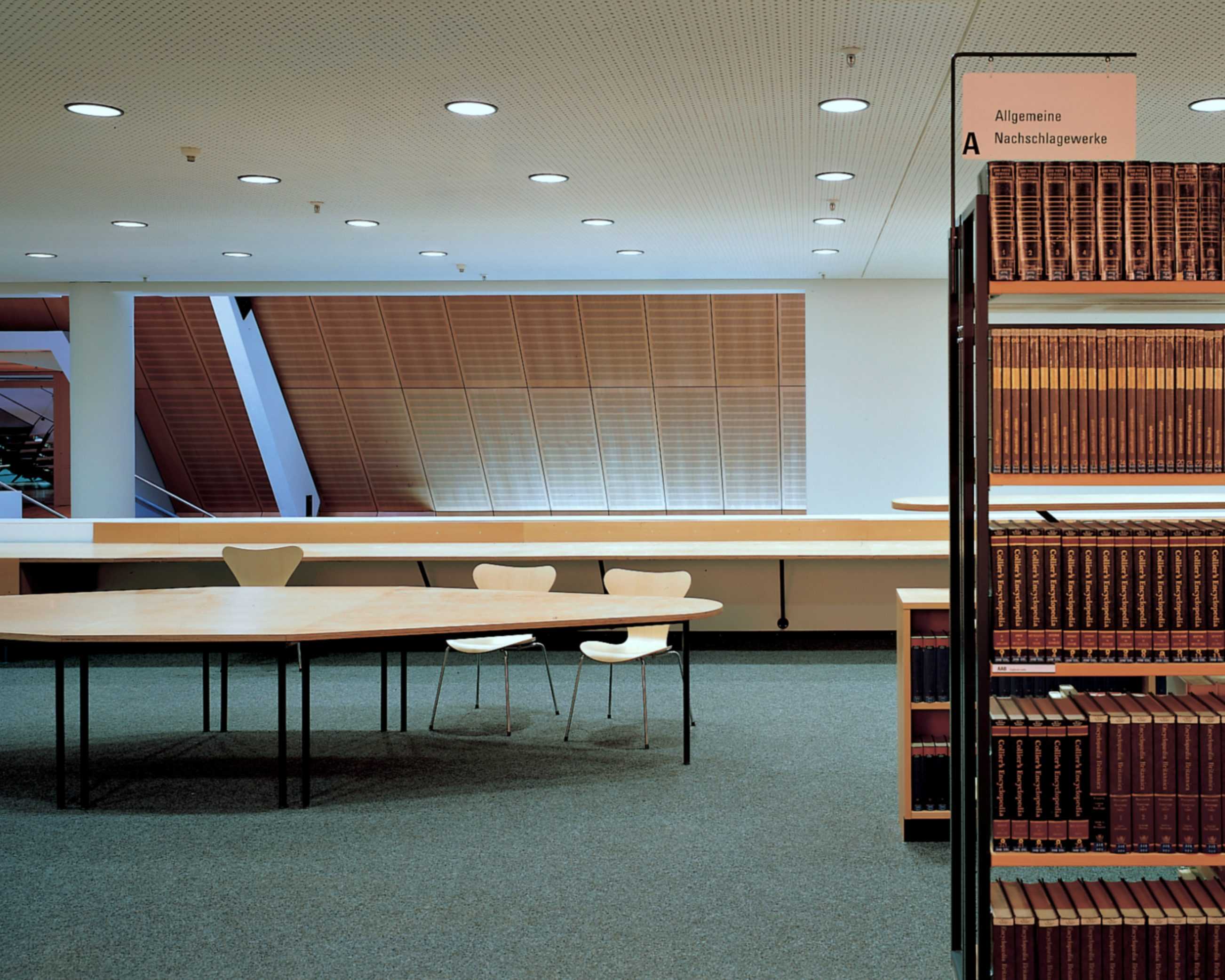
The Münster Library was BOLLES+WILSON’s first major public commission. After more than ten years it remains near the top of Germany’s ‘library-user-ranking-list’. A verification not only of functionality but also of the attention to detail, to spatial multiplicity and to the ambience and atmosphere within.
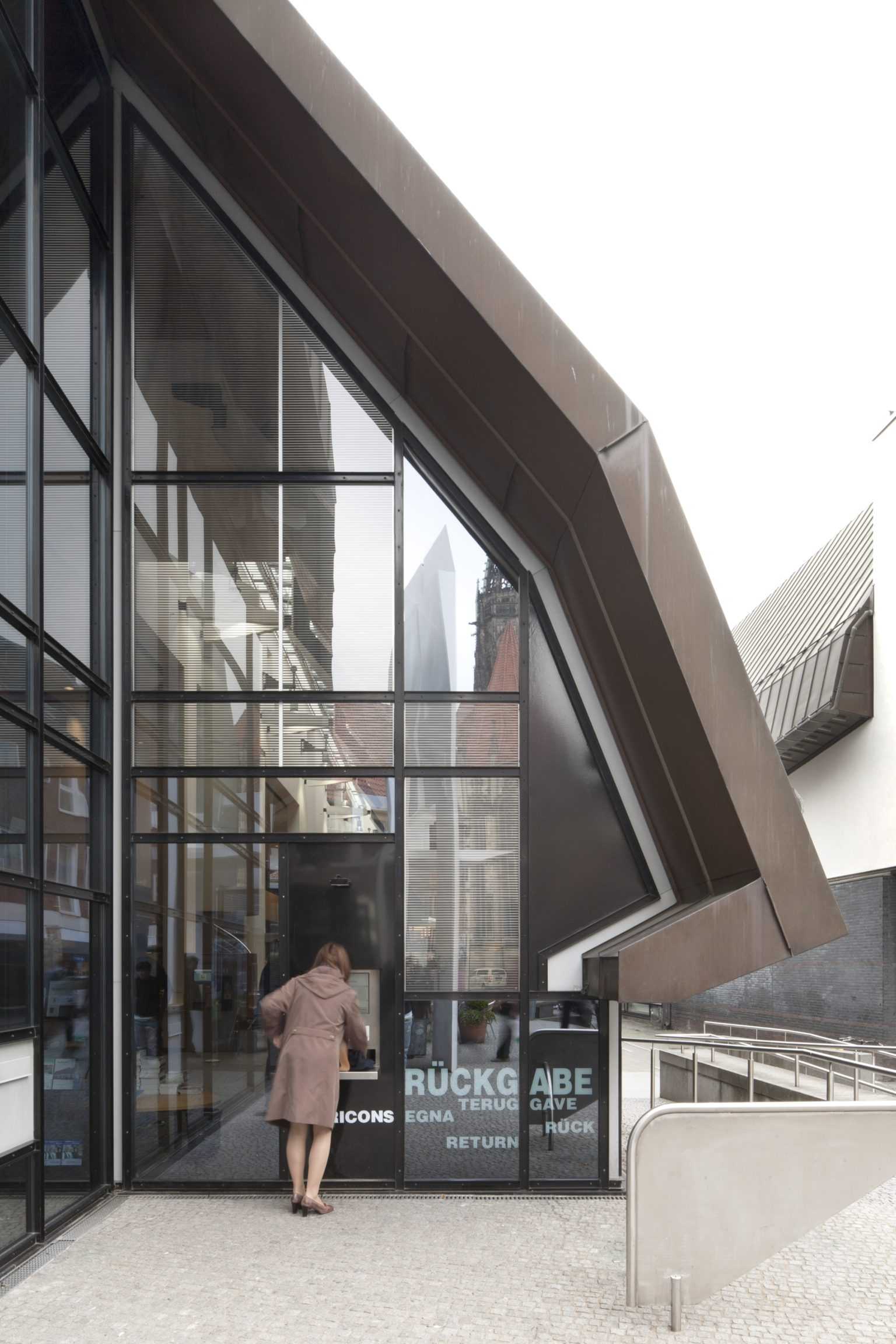
The complexities of the overall building form are derived from internal organisation and from a careful re-constitution of the fragmented context. A new pedestrian street on the axis of the nearby Lamberti Church divides the not inconsiderable mass of the Library. This fissure in the library volume is closed with folded screens (copper outside, acoustically absorbing perforated wood panels within).
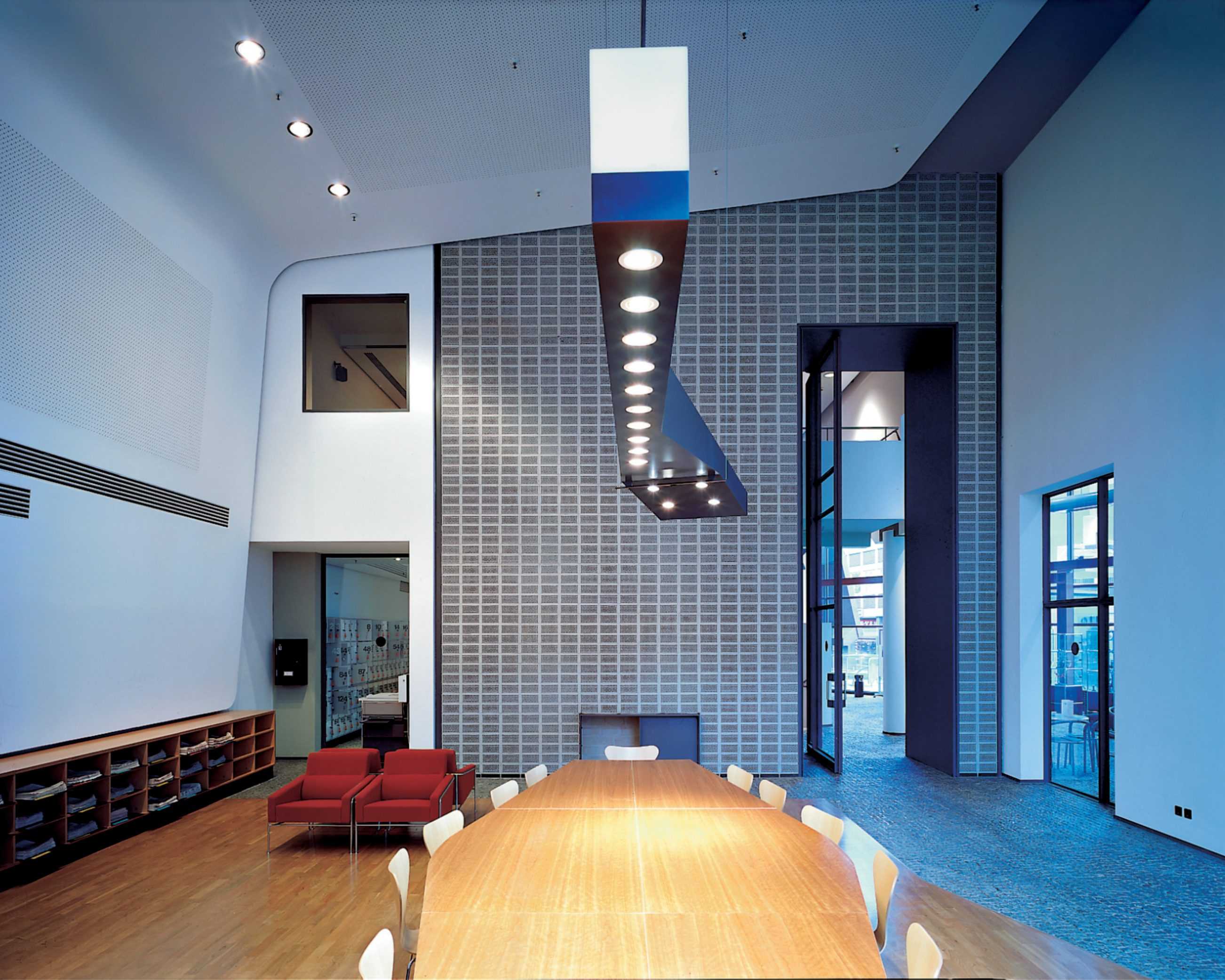
A transparent entrance zone (café, newspaper salon) leads via an information supermarket to the main information desk on the connecting bridge. This in turn is adjacent to book stacks in the ship-like outer volume. The atmosphere is quiet, studious. Books line the outer curved wall, a dramatic stair leads down through a 22 m void to the basement media library, which connects in turn to the courtyard facing children’s library and back up to the entrance zone. Up to four thousand users enter the Münster Library on one day.
+ + +
Münster City Library – Update 2010
With a newly painted facade and new automatic check out and 24-hour return automat the Münster City Library in its 18th year remains near the top of the German public library ranking list.





TYPOLOGY: Competition / Educational, Public
COUNTRY: Germany
CITY: Frankfurt
YEAR: 2025
COMPETITION: Open ideas competition according to RPW
GFA: 6.200 sqm (new) + 14.000 sqm (existing)
CLIENT: Stadt Frankfurt
NO NEW CONSTRUCTION ON PAULSPLATZ
A cohesive ensemble that offers visitors the opportunity to explore the history and significance of democracy.
THE DEMOCRATIC LOBBY
Positioned between the Paulskirche and the New Building, the foyer serves as a central link between all functions: the Paulskirche with its historical exhibition, the New Building with its event spaces, workshops, and permanent and temporary exhibitions, and the Kämmerei with its library, laboratories, and offices.
LOCATION & URBAN DESIGN
The New Building accommodates a 368-seat event hall, temporary exhibition spaces on the lower floors, and a permanent exhibition on the upper levels. Its deliberate placement along Berliner Straße preserves the openness of Paulsplatz, fostering a compelling visual and spatial dialogue with the Paulskirche.
MATERIALITY
The solid portions of the façades of both the New Building and the Democratic Lobby are clad in red Main sandstone. Walls and roof are constructed from glued laminated timber trusses in a sandwich system, with glass layers on both interior and exterior faces. The south façade integrates approximately 600 m² of photovoltaic panels, ensuring a sustainable energy contribution.
CONSIDERED POSITIONING
The vertical circulation core (8.50 × 4.80 m) is strategically placed in front of the closed eastern façade of the former Federal Audit Office building, preventing unwanted overshadowing while maintaining clear visual connections.


TYPOLOGY: Cultural
COUNTRY: Luxemburg
CITY: Luxembourg (Kirchberg)
YEAR: 2023
COMPETITION: 2003, 1st prize
GFA: 38.200 sqm
CLIENT: Le Gouvernement du Grand-Duché de Luxembourg / Ministère de la Mobilité et des Travaux publics
COLLABORATOR: cooperation with local office: WW+ architektur + management sàrl (tender + construction management)
AWARD: 2021 DAM Prize for Architecture in Germany, category Buildings Abroad (Shortlist)
PHOTOS: © Christian Richters
PHOTOS MODEL: © Tomasz Samek
PHOTOS CONSTRUCTION: © Administration des bâtiments publics / Bibliothèque nationale du Luxembourg + BOLLES+WILSON
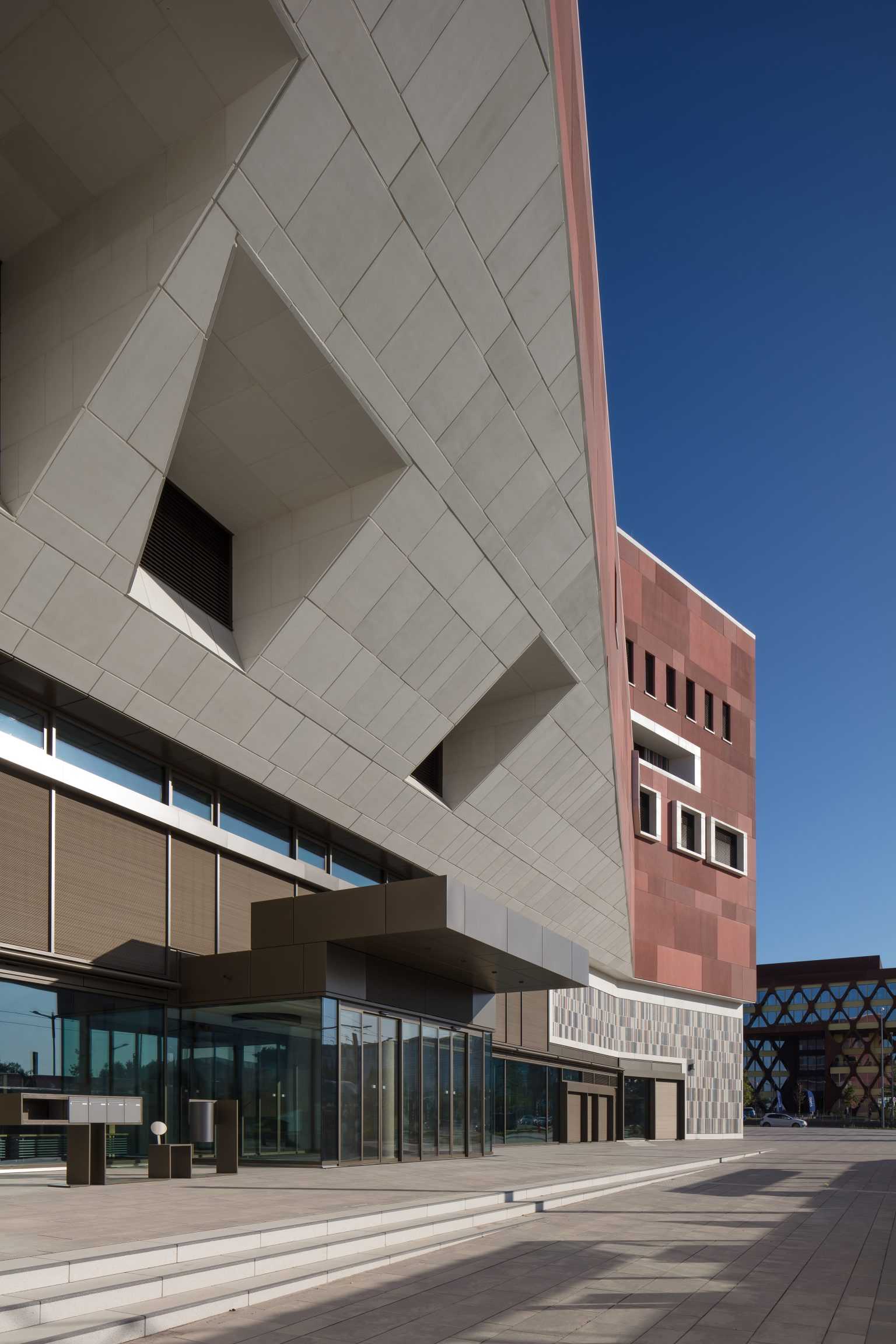
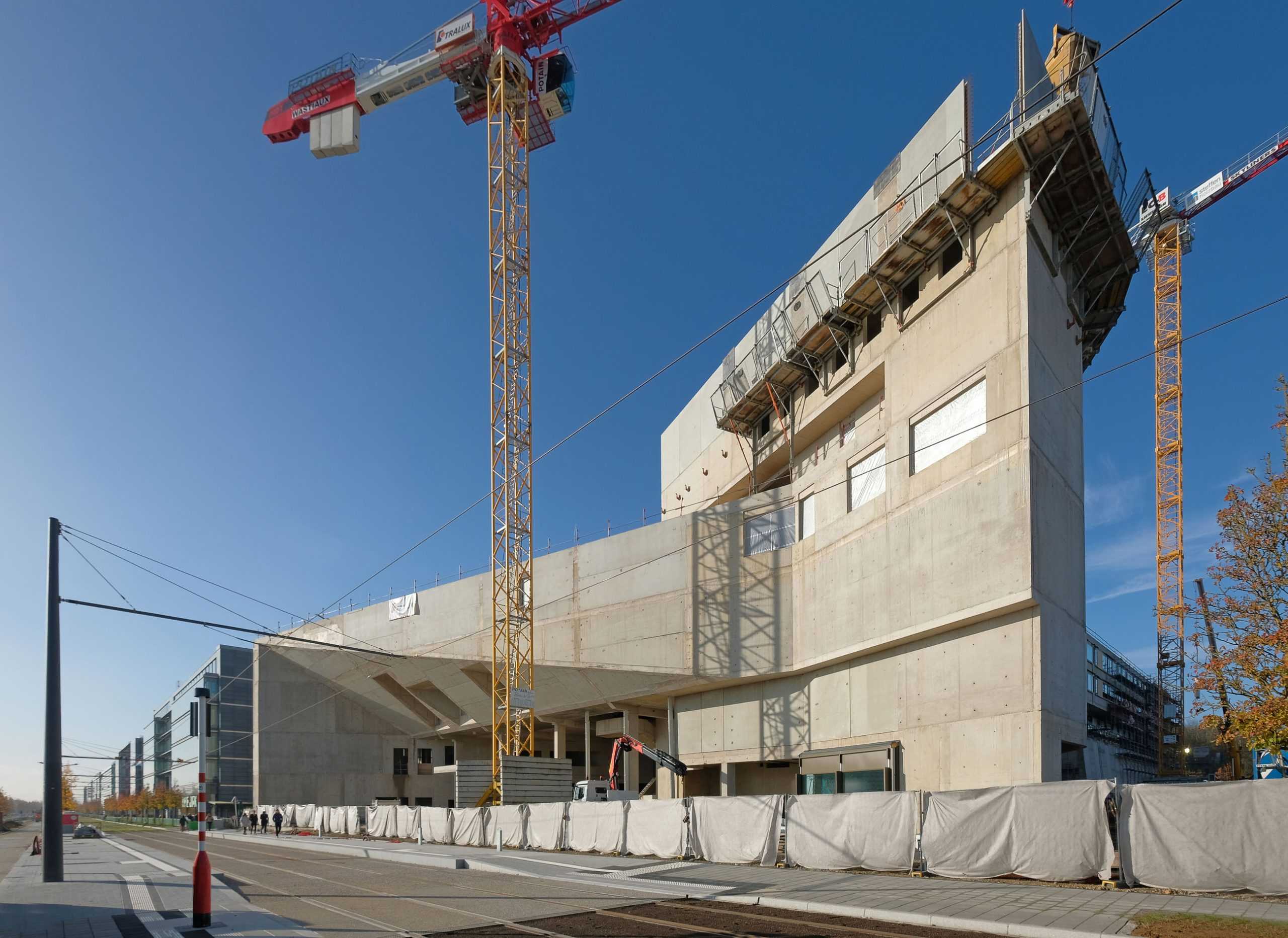
The task of the Patrimonial and Universal Library is the housing and protection of Cultural and Intellectual Texts – a foundation stone of the intellectual community. For the BnL a compact, energy efficient building volume houses a wide range of functional entities.
A transparent imposing, but at the same time inviting, facade fronts onto the Avenue John F. Kennedy. Internal functions unfold sequentially from this entrance gesture; Foyer +, Café (with upper level conference + seminar rooms), next the Reading Room – a landscape of terraced workstations and bookshelves. The principle building block is located deep within the building, a central and compact archive over five levels. This secure core is encased by public spaces and forms a plateau on top of which the largest bookshelf area and reading-deck is found.
The principle facade material is large format red pre-cast concrete panels – a patchwork due to a variety of surface treatments (water/sand-jeting, acid washing). The architectural intention is homogeneity, a material unity of the overall building volume, with an undercurrent of surface articulation. The archive plateau is encased in a bastion-like wrapping of stone-filled Gabion cages. Planning prioritized energy efficiency; technical installations take second place in favour of an activating of the buildings thermal mass to engender a sustainable interior climate.




TYPOLOGY: Cultural
COUNTRY: Germany
CITY: Nebra
YEAR: 2004
COMPETITION: Invited competition
AWARDS: Special price
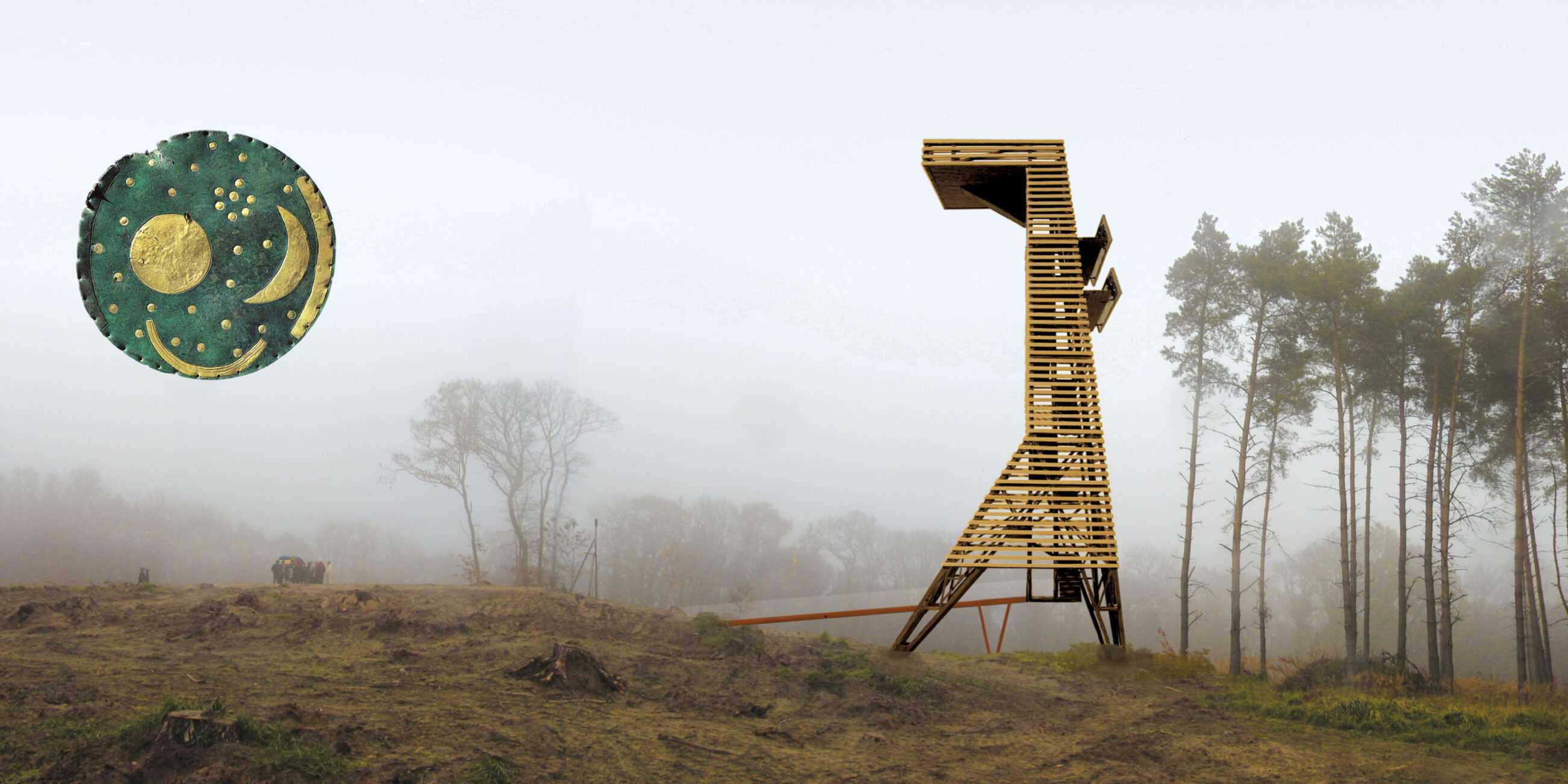
An observation Tower connects an archaeological dig to its wider landscape. Nearby the Corten clad visitors centre with its cargo of sky disk (4,000 years old sky map) paraphernalia wriggles a few metres above rolling fields casting at its extremity a laconic glance skywards.


TYPOLOGY: Cultural
COUNTRY: Netherlands
CITY: Rotterdam, Kop van Zuid
YEAR: 2001
COMPETITION: Competition 1996, 1st Prize
GFA: 24.000 sqm
CLIENT: City of Rotterdam
COLLABORATOR: Bureau Bouwkunde (local support office)
AWARD: Mies van der Rohe Award 2001 (Shortlist)
PHOTOS: © Christian Richters, © L5, © BOLLES+WILSON
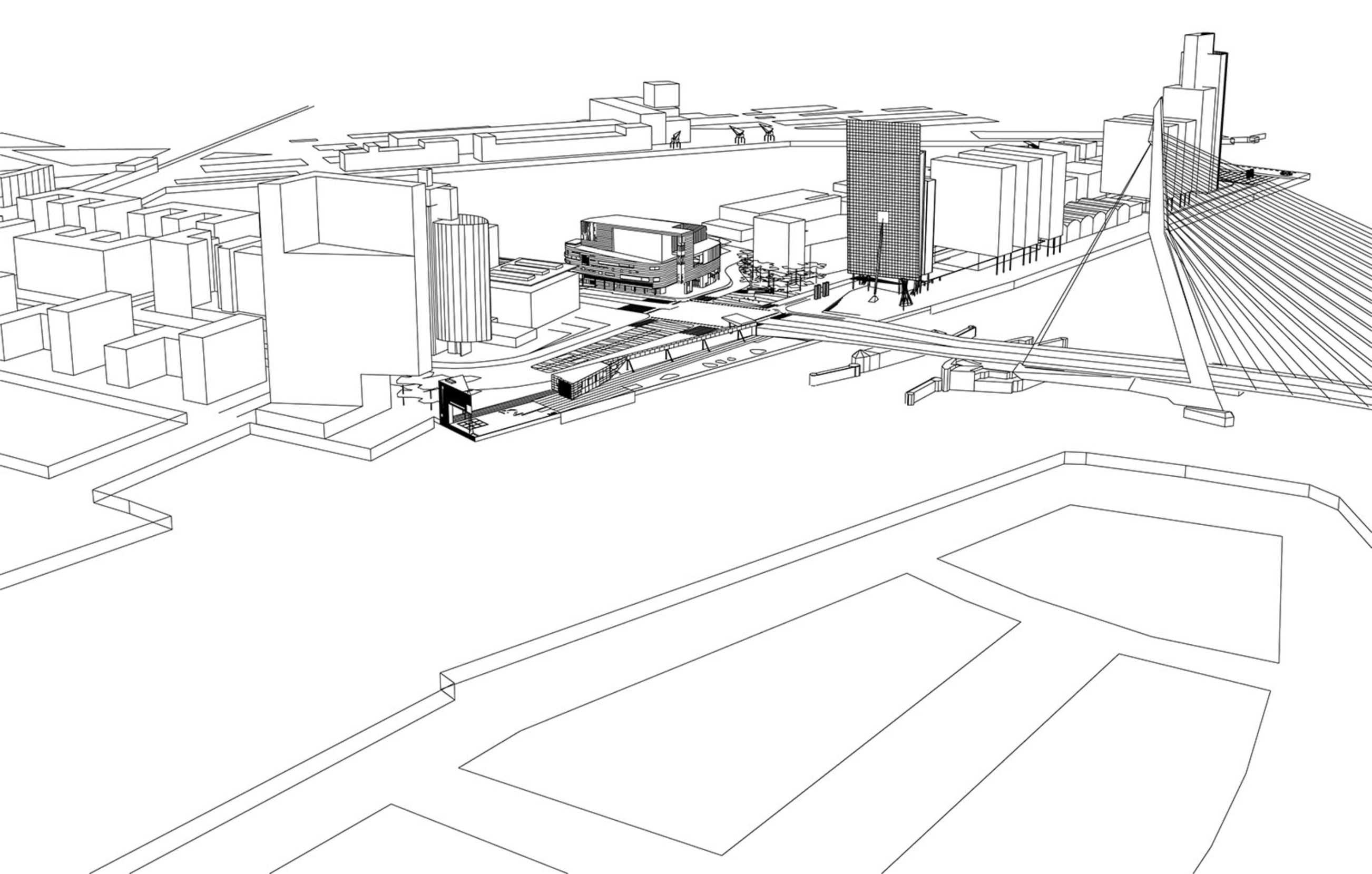
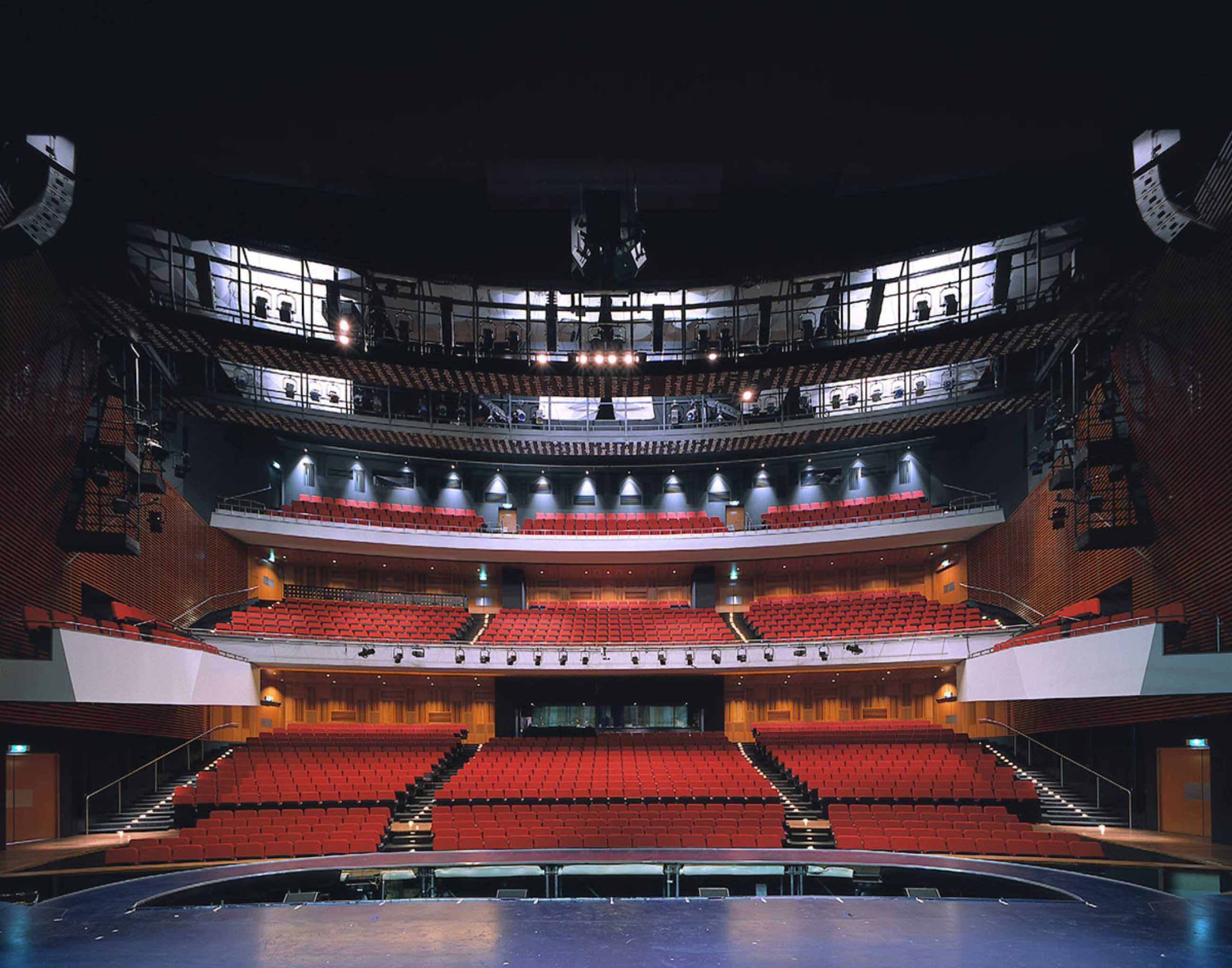
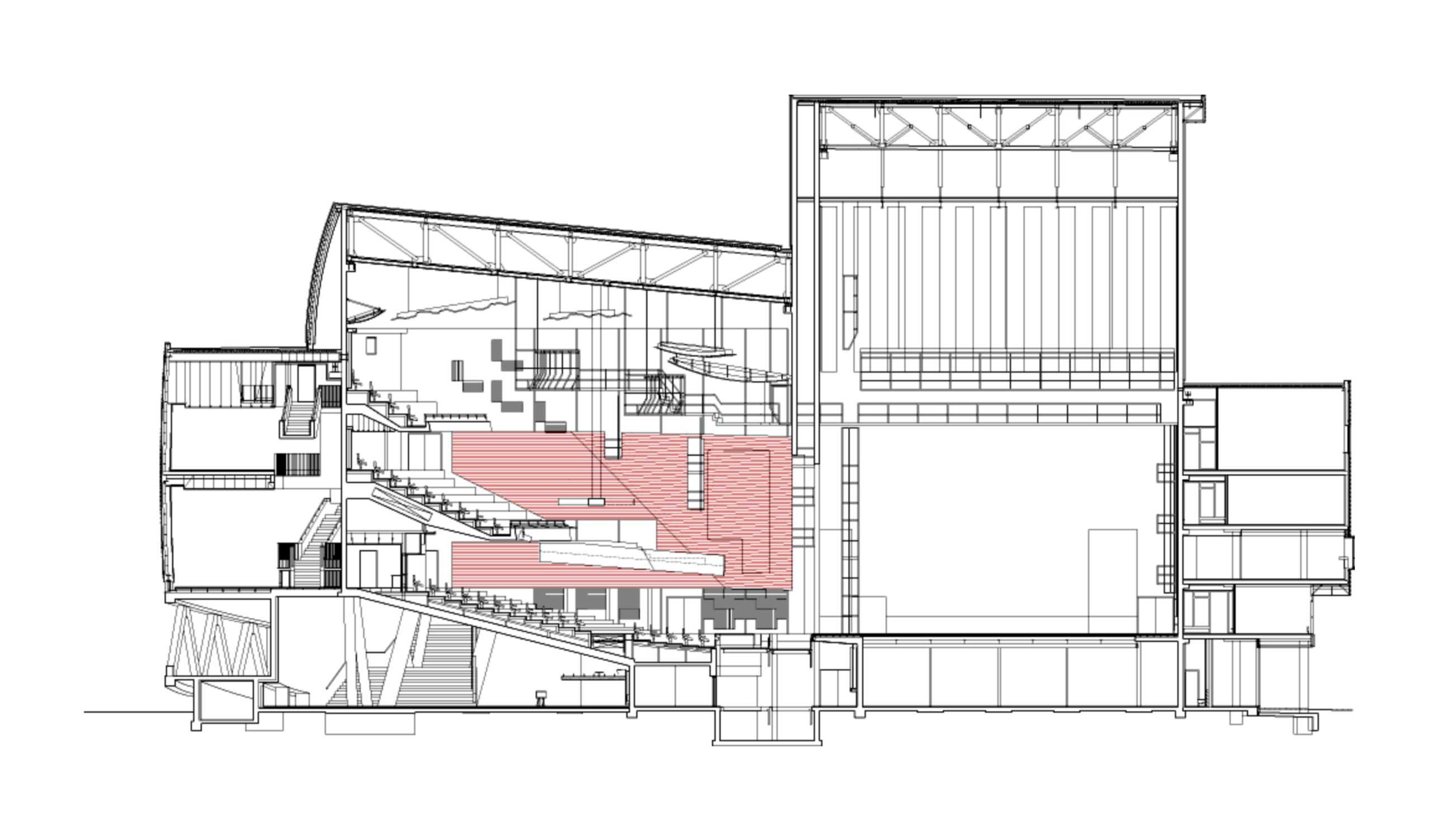
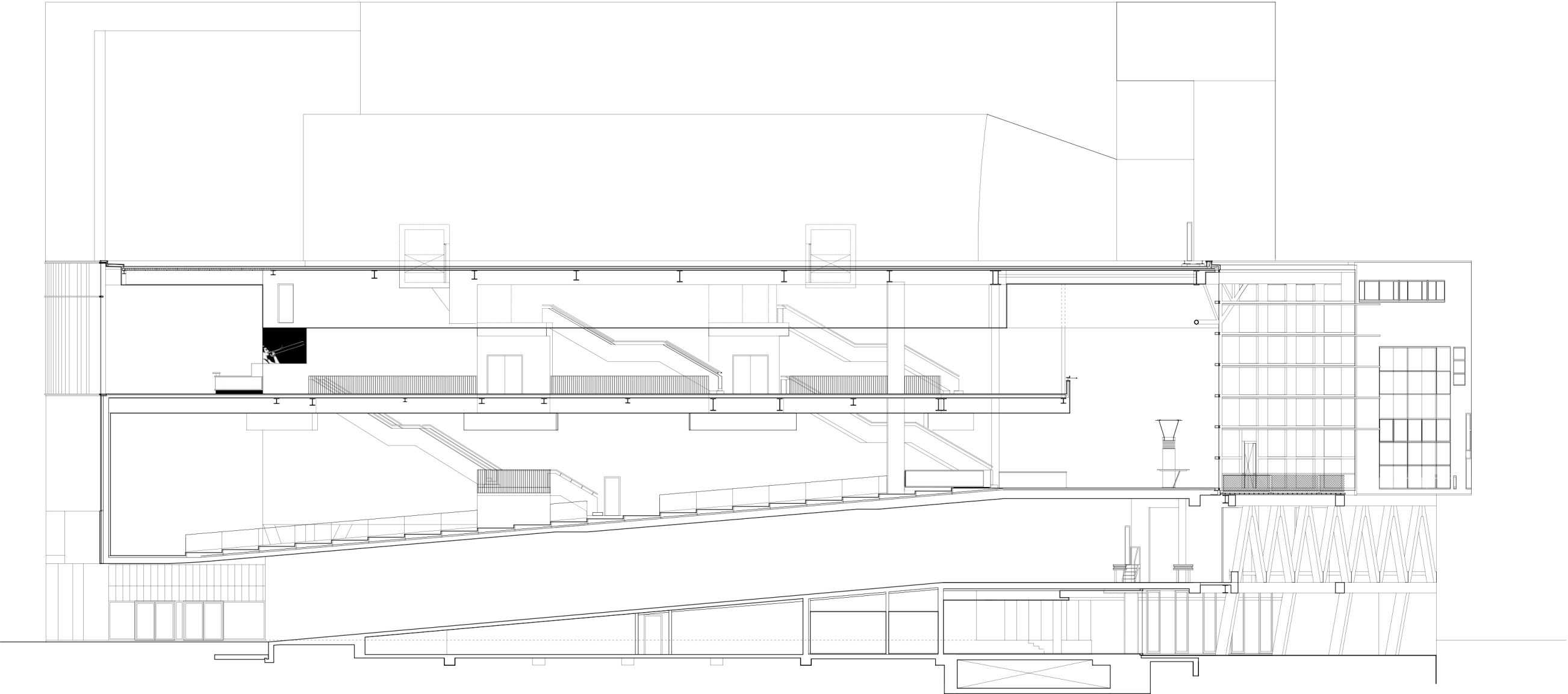
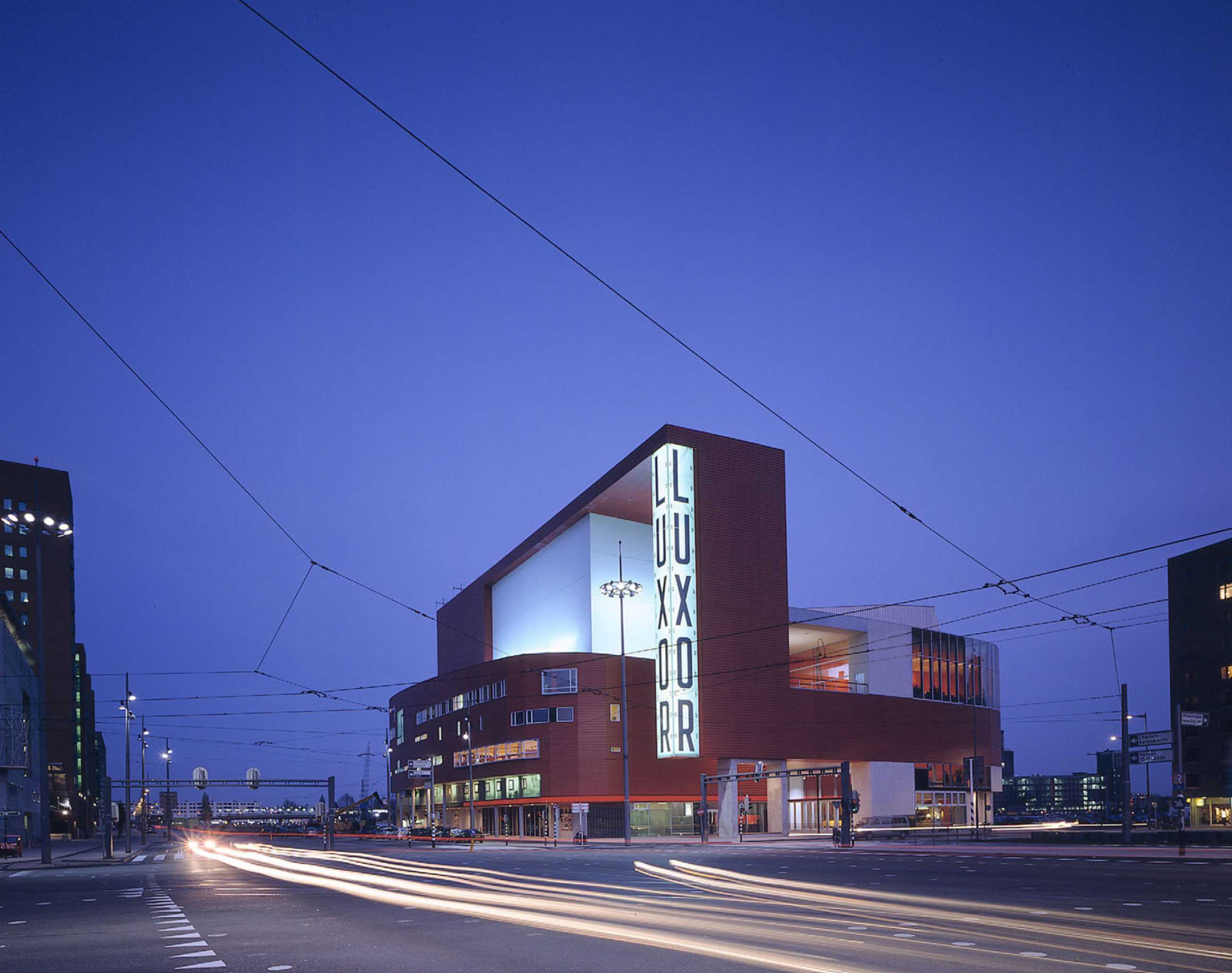
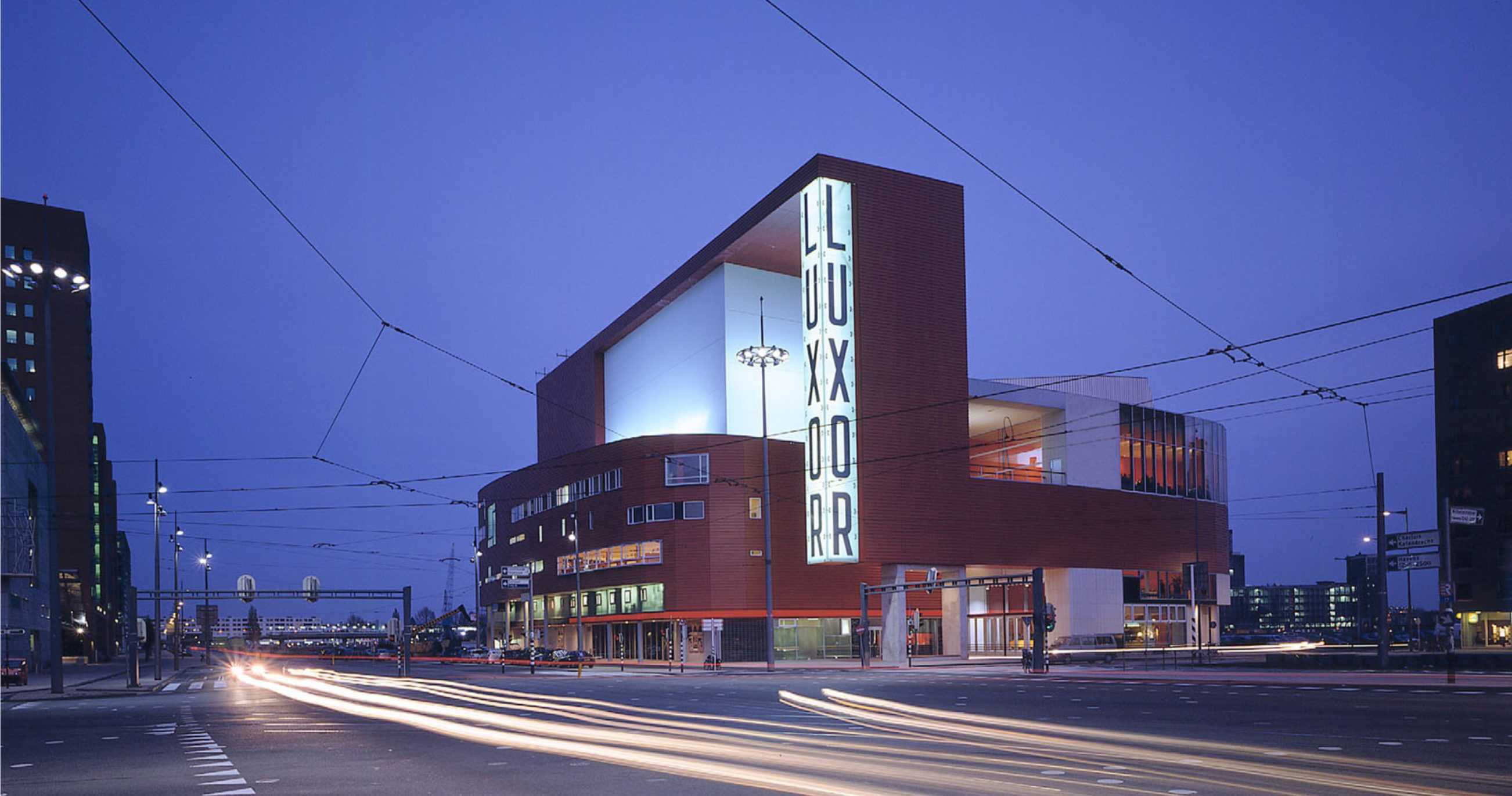
The New Luxor Theatre faces both the Maas River and Rijn Harbour – A multiple orientation, a single wrapping facade, a 360° building. An internalised ramp allows three 18 m long trucks to park directly besides the first floor stage. The ramp roof provides an architectural promenade in the foyer. The Luxor auditorium seats 1500, a giant scaled musical instrument, a surprisingly ‘intimate room’. The Luxor facilitates with an appropriated spatial theatricality the well working of complex theatre logistics.
On the 11th of May 2011 BOLLES+WILSON’S Luxor Theatre in Rotterdam celebrated its tenth anniversary with a spectacular Gala show.
The evening also marked the retirement of Luxor director Rob Wiegman – the great Rob Wiegman without whom this building, this resounding and on-going cultural event would not have happened. Tributes abounded, speeches – emotional Actors, Performers, Politicians, Rotterdamers – Architects.