
TYPOLOGY: Hotel
COUNTRY: Albania
CITY: Tirana
YEAR: 2016-2025
ARCHITECTS: BOLLES+WILSON with Atelier 4
PHOTOS: © BOLLES+WILSON
New HIT was the working title of this project for the Albanian investor Mr. Ram Geci – it has now been franchised to the INTERCONTINENTAL hotel chain.


TYPOLOGY: Competition / School
COUNTRY: German
CITY: Gescher
YEAR: 2023
COMPETITION: Closed competition, 3rd Prize
COLLABORATOR: wbp Landschaftsarchitekten GmbH, Bochum
GFA: 4.117 sqm
CLIENT: Glockenstadt Gescher
The design carefully combines the historic building fabric with a modern extension. The existing façades are preserved and linked by a central, wedge-shaped structure that forms the heart of the school with its cafeteria, auditorium, and foyer.
All areas are fully accessible, with outdoor spaces clearly defined: a large playground to the north, a nature-oriented learning zone to the southwest, and a green entrance courtyard to the southeast. The foyer serves as a central meeting point and hub, connecting classrooms, multipurpose spaces, and flexible learning areas.
The new building respects the historic architecture while reinterpreting its language in a contemporary way—creating a school that is open, functional, and identity-shaping for students, staff, and the city of Gescher.


TYPOLOGY: Competition / Office
COUNTRY: German
CITY: Eschweiler
YEAR: 2023
COMPETITION: Closed competition, 2nd Prize
COLLABORATOR: wbp Landschaftsarchitekten GmbH, Bochum
GFA: 11.880 sqm
CLIENT: Stadt Eschweiler
The Change Factory is Eschweiler’s new green, flexible, and flood-resilient innovation hub.
Instead of one large block, it’s a cluster of pavilions, halls, and workspaces connected by a leafy promenade linking the city centre to Drieschplatz. Reclaimed bricks, repurposed windows, and lush façades show a commitment to circular construction, while active roofs host orchards, gardens, sports areas, and solar panels. A contoured green ring and rain-retention meadows provide natural flood protection, turning resilience into a design feature. Inside, adaptable modular buildings offer space for events, co-working, research, and community life. Combining low-tech solutions with smart energy systems, the Change Factory sets a new standard for sustainable urban development.


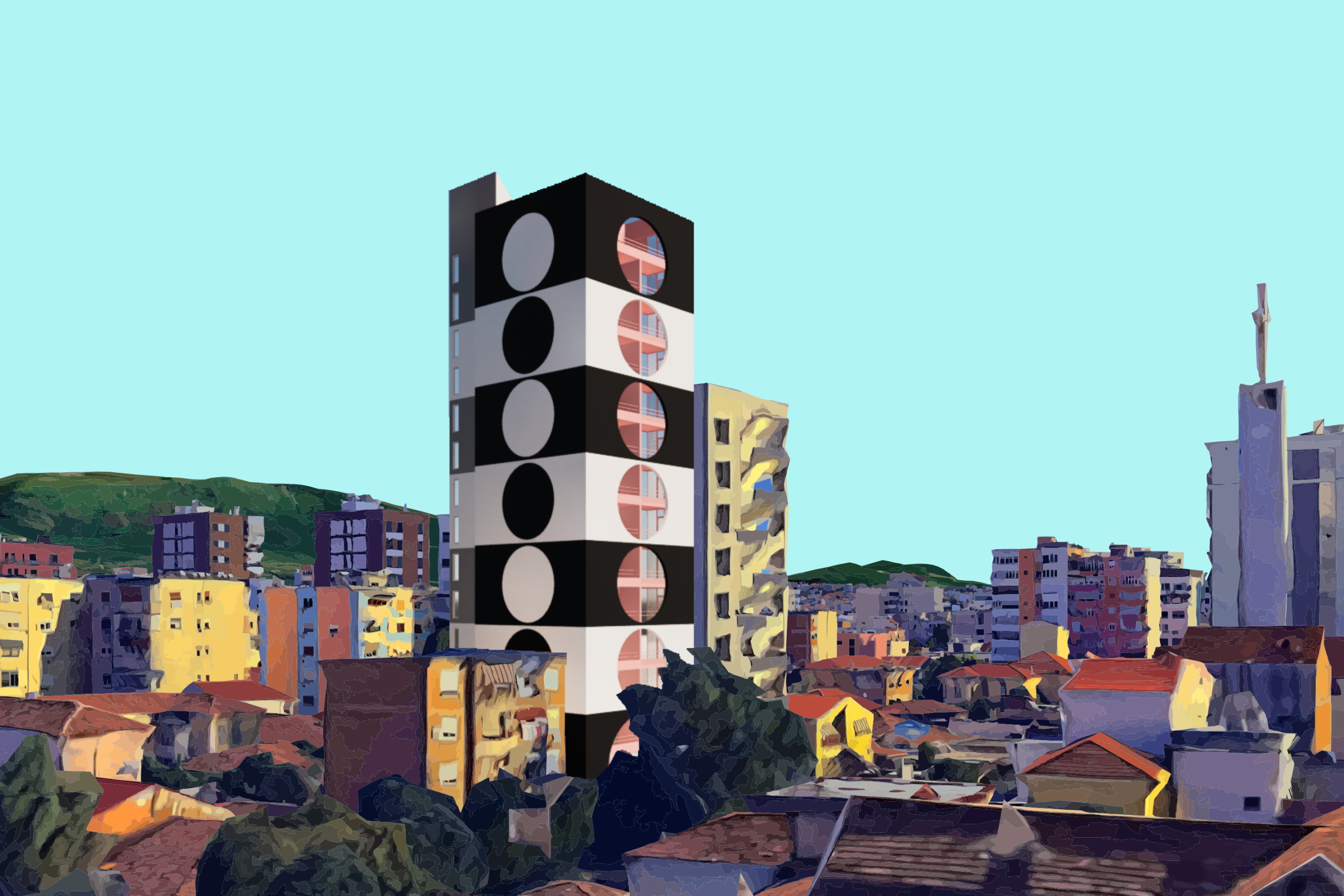
RRUGA ALI PASHA GUCIA
TIRANA
FOR CHRISTIN INVESTMENTS 2025
CONCEPT
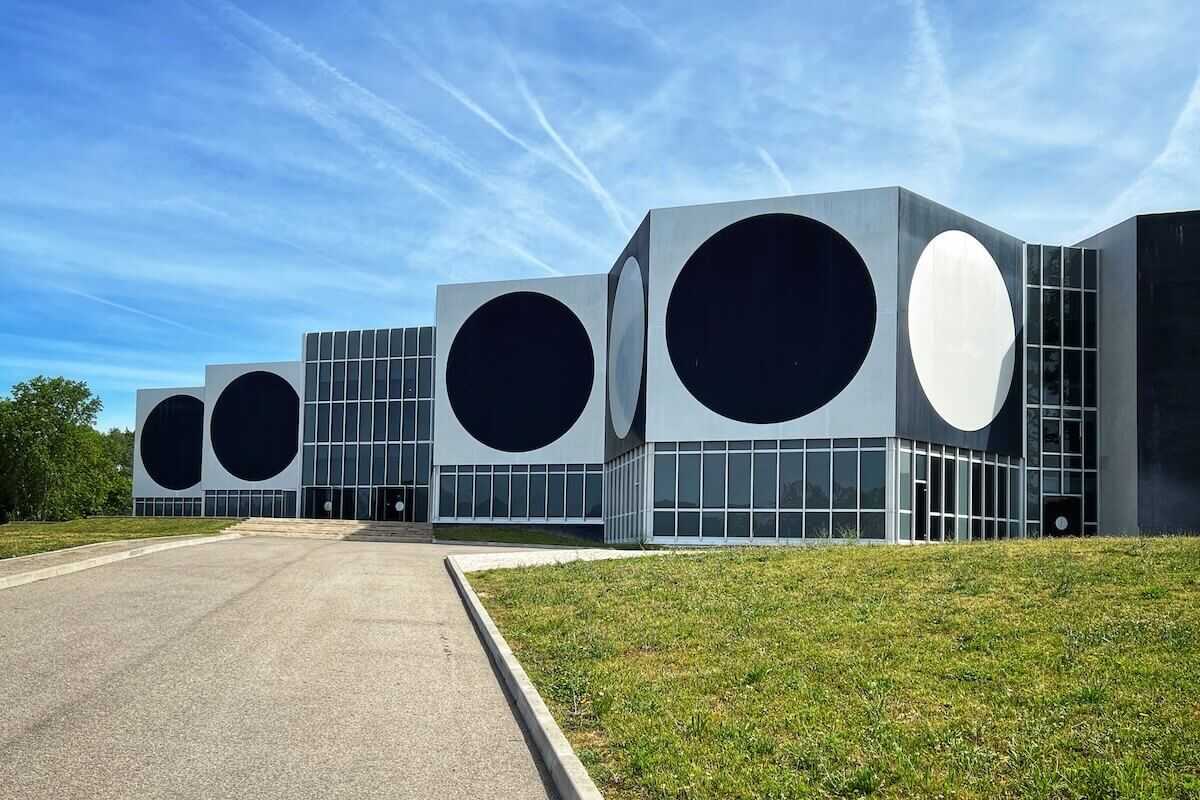
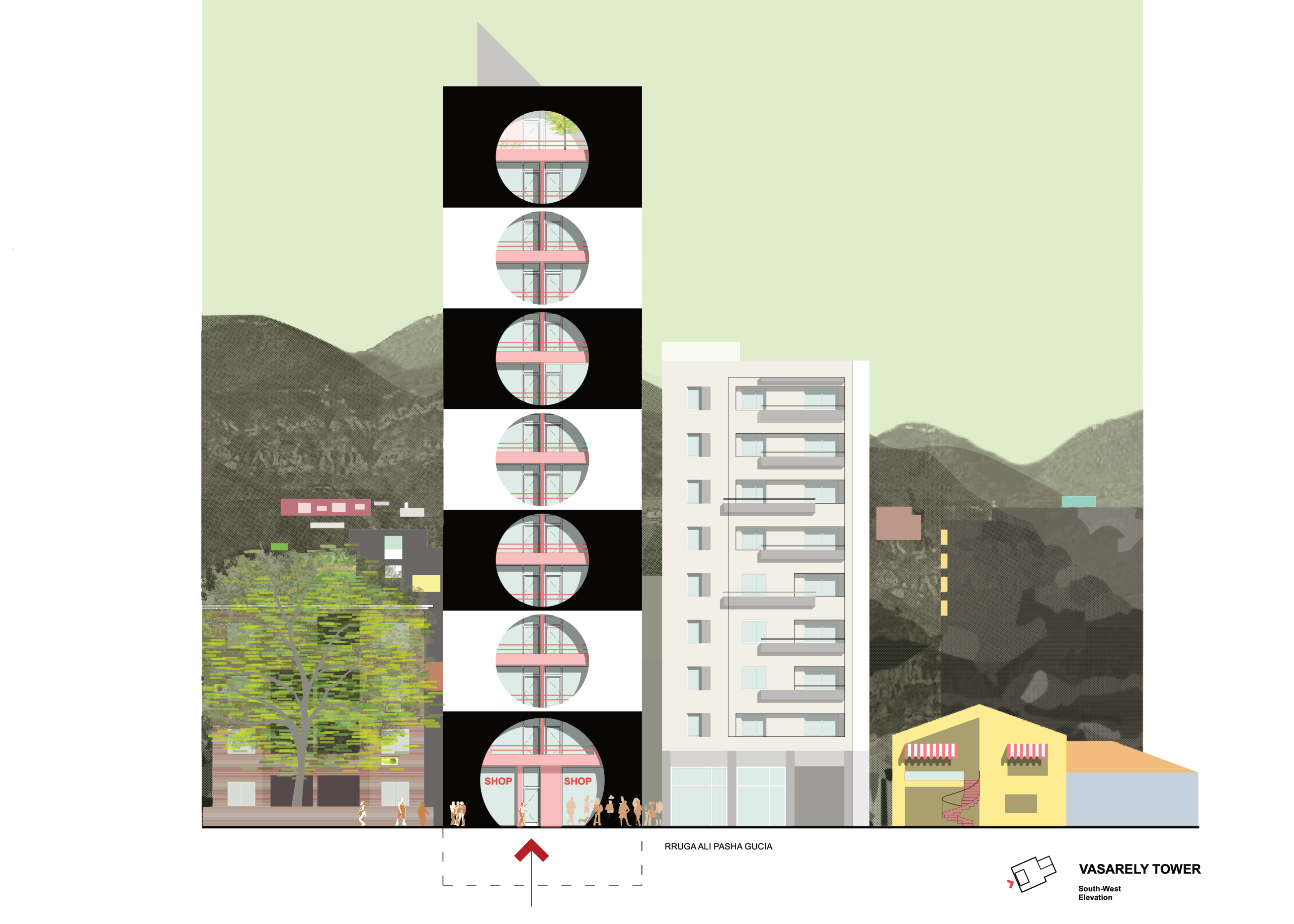
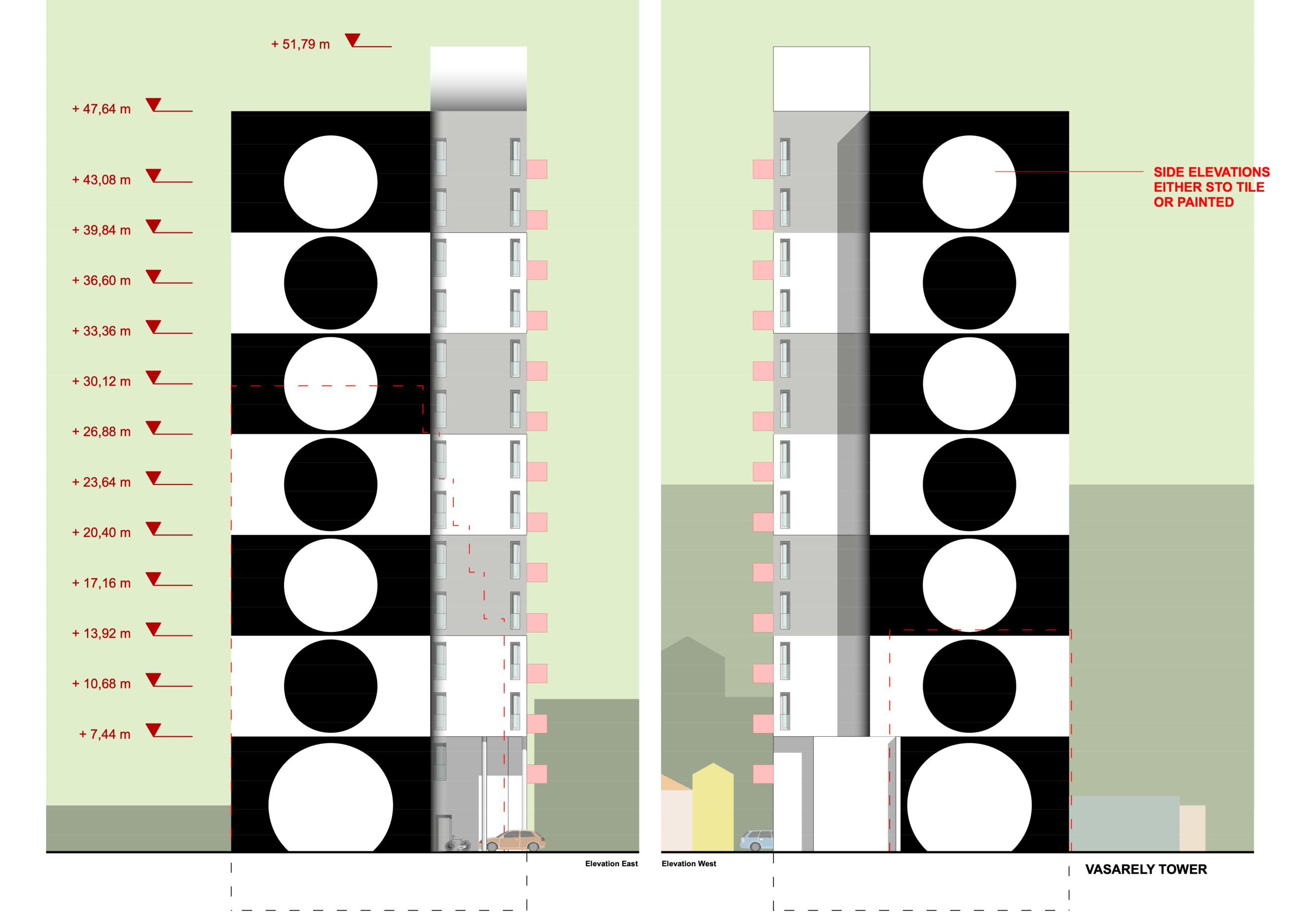
The theme of the Vasarely Tower design is derived from the hungarian pop artist Victor Vasarely who used simple geometric shapes and strong contrasting colours. The Vasarely Museum in Aixen-Provence interprets Vasarelys paintings as a building. For our proposal the horizontal museum becomes a vertical tower.
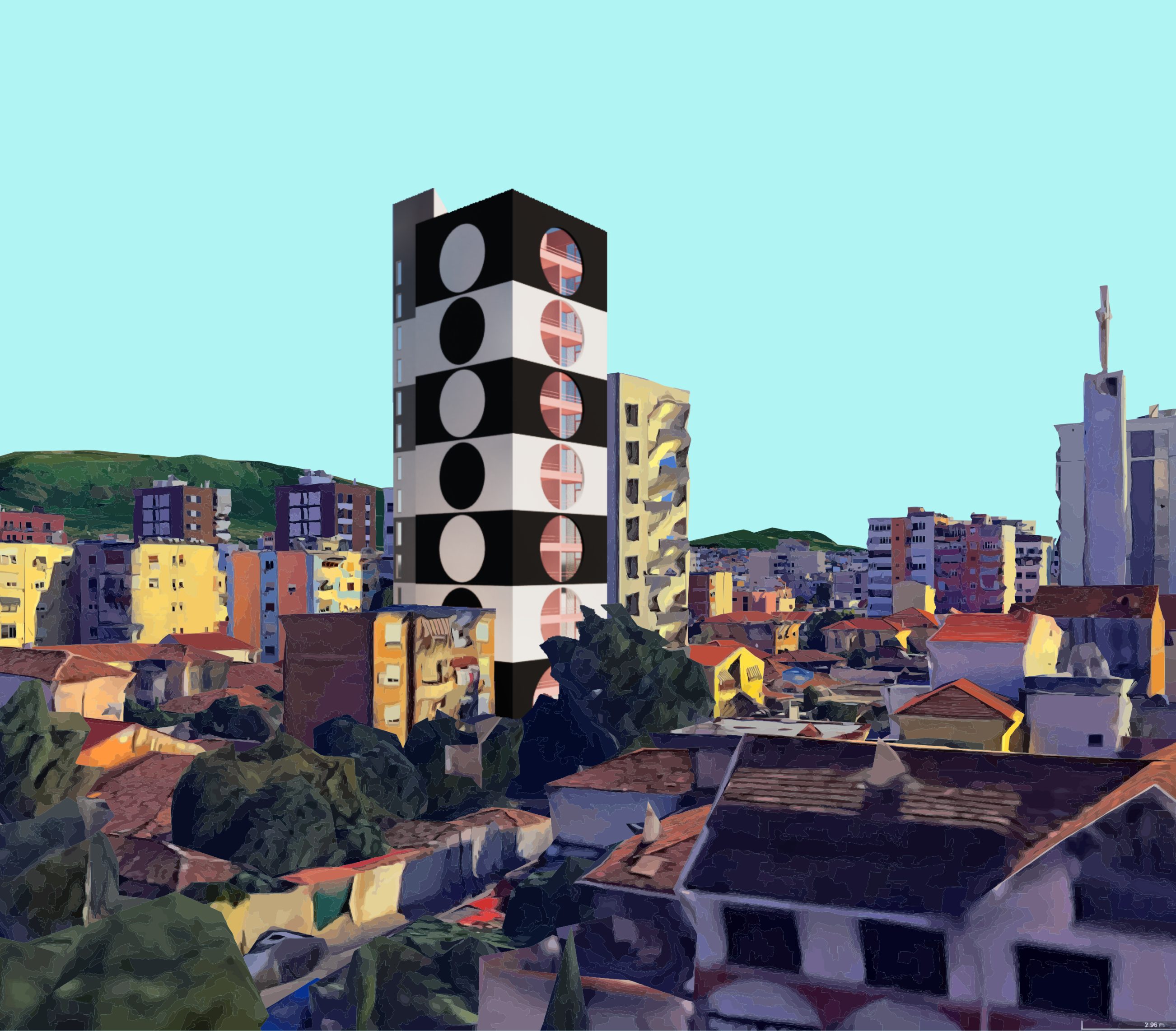
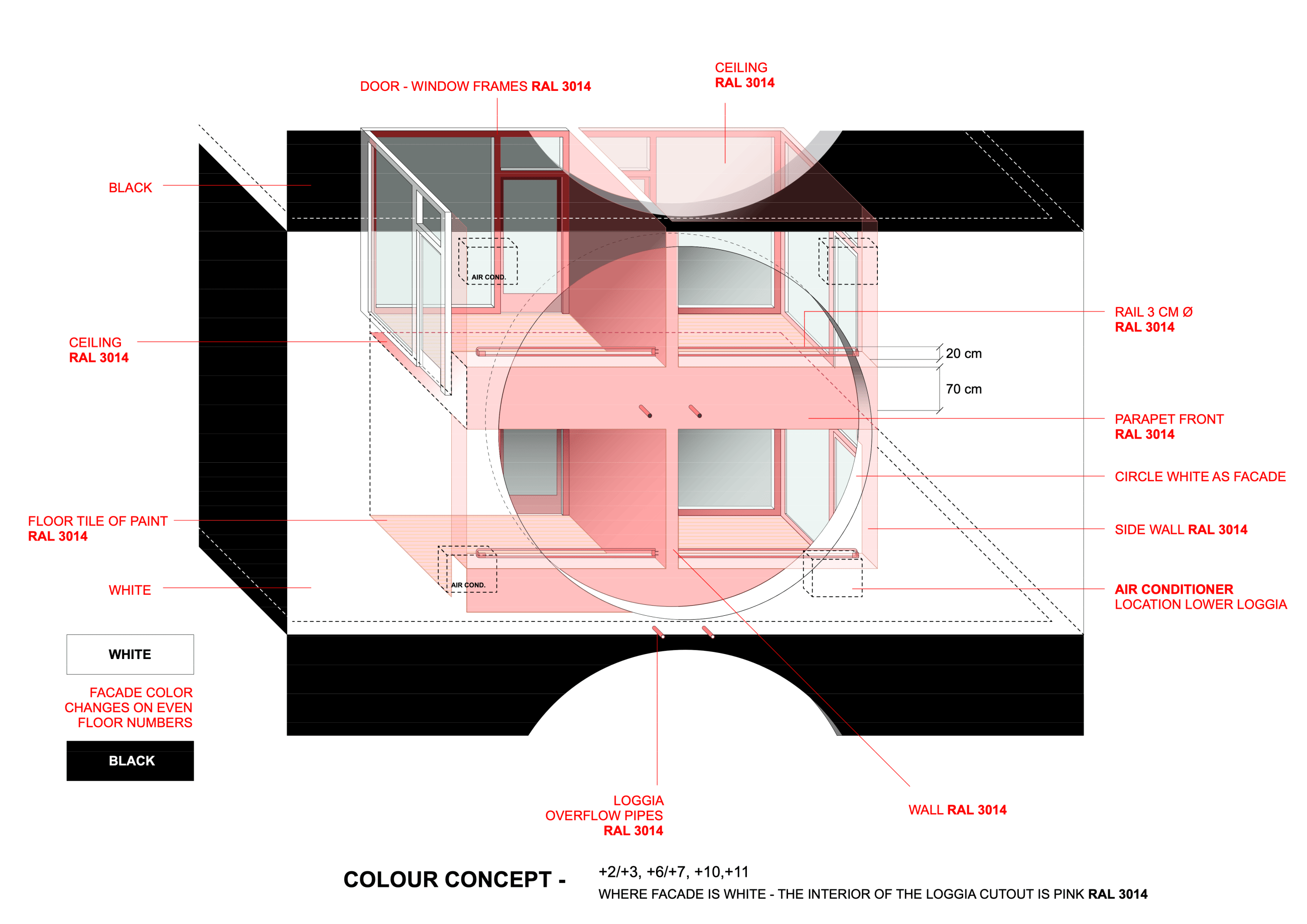
Within the loggia all surfaces and windowframes are coloured pink RAL 3014 (Vasarely colour contrast).

TYPOLOGY: Competition / Educational, Public
COUNTRY: Germany
CITY: Frankfurt
YEAR: 2025
COMPETITION: Open ideas competition according to RPW
GFA: 6.200 sqm (new) + 14.000 sqm (existing)
CLIENT: Stadt Frankfurt
NO NEW CONSTRUCTION ON PAULSPLATZ
A cohesive ensemble that offers visitors the opportunity to explore the history and significance of democracy.
THE DEMOCRATIC LOBBY
Positioned between the Paulskirche and the New Building, the foyer serves as a central link between all functions: the Paulskirche with its historical exhibition, the New Building with its event spaces, workshops, and permanent and temporary exhibitions, and the Kämmerei with its library, laboratories, and offices.
LOCATION & URBAN DESIGN
The New Building accommodates a 368-seat event hall, temporary exhibition spaces on the lower floors, and a permanent exhibition on the upper levels. Its deliberate placement along Berliner Straße preserves the openness of Paulsplatz, fostering a compelling visual and spatial dialogue with the Paulskirche.
MATERIALITY
The solid portions of the façades of both the New Building and the Democratic Lobby are clad in red Main sandstone. Walls and roof are constructed from glued laminated timber trusses in a sandwich system, with glass layers on both interior and exterior faces. The south façade integrates approximately 600 m² of photovoltaic panels, ensuring a sustainable energy contribution.
CONSIDERED POSITIONING
The vertical circulation core (8.50 × 4.80 m) is strategically placed in front of the closed eastern façade of the former Federal Audit Office building, preventing unwanted overshadowing while maintaining clear visual connections.


