TYPOLOGY: Residential
COUNTRY: UK
CITY: London
YEAR: 1987
PHOTOS: © BOLLES+WILSON
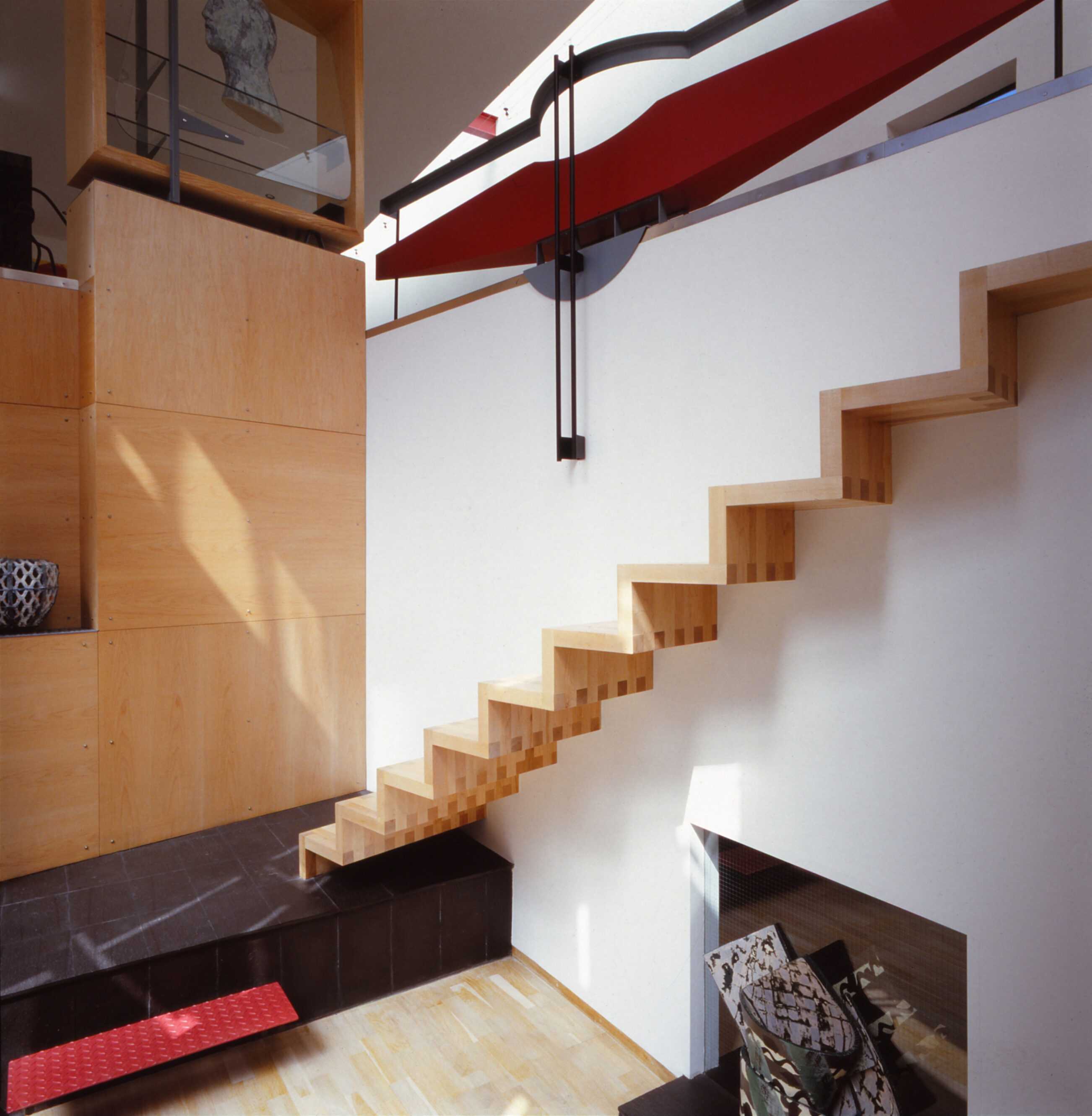
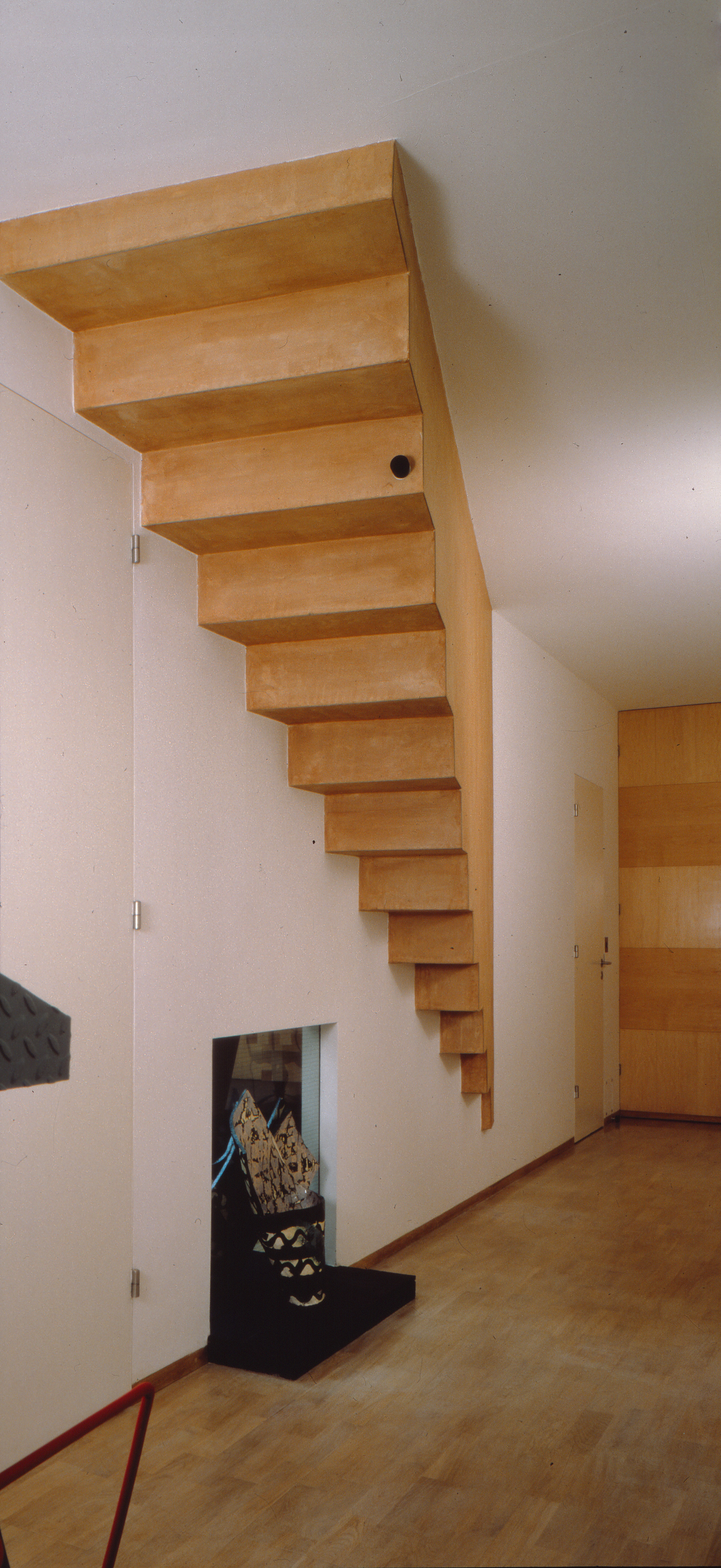
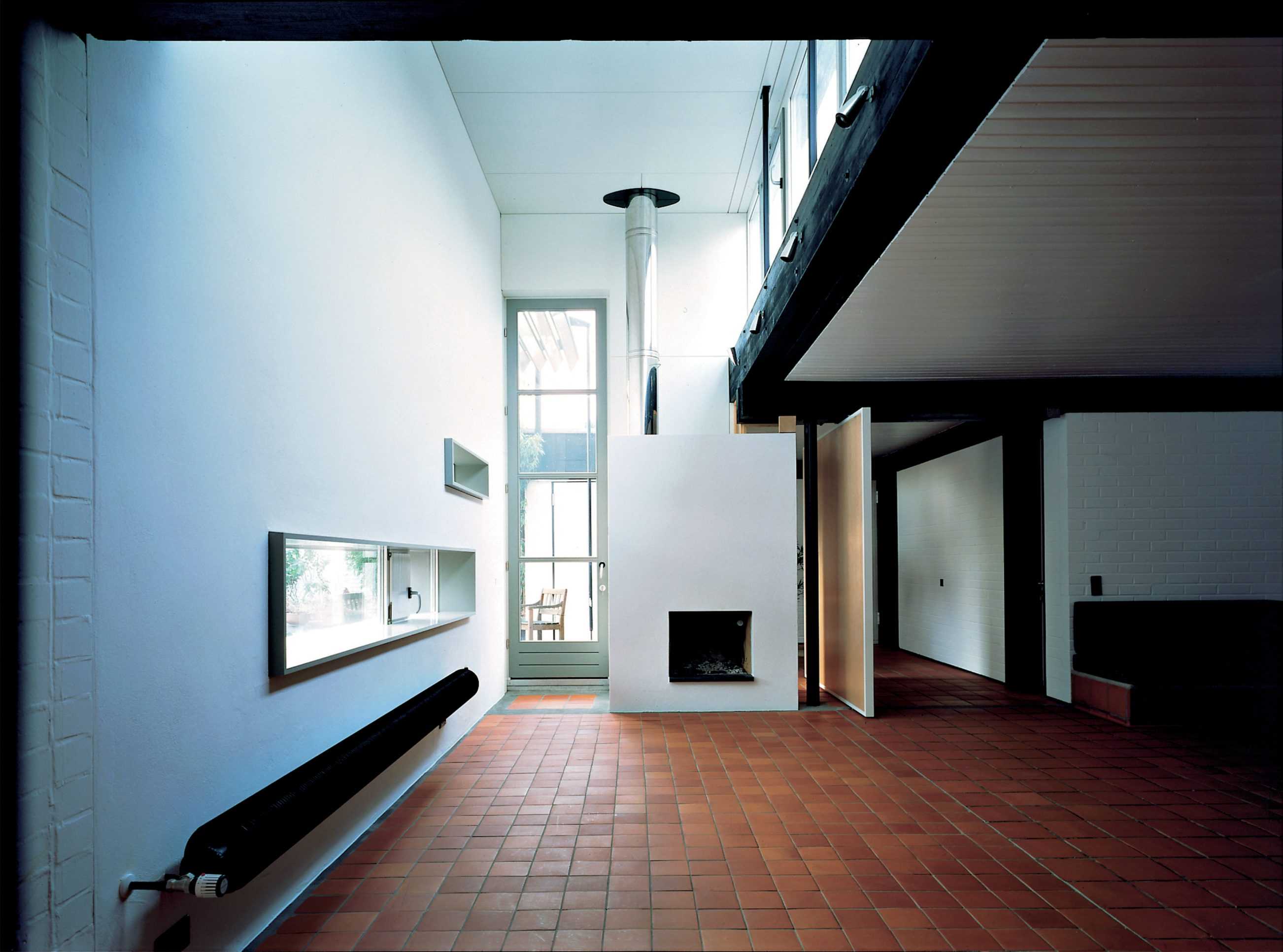
No grand statement rather a series of practical opportunities. First the restructuring of the row of rundown Mews Houses into a new white box. A large window breaks through the white façade, the view is not good, the glass is opaque, blinded.
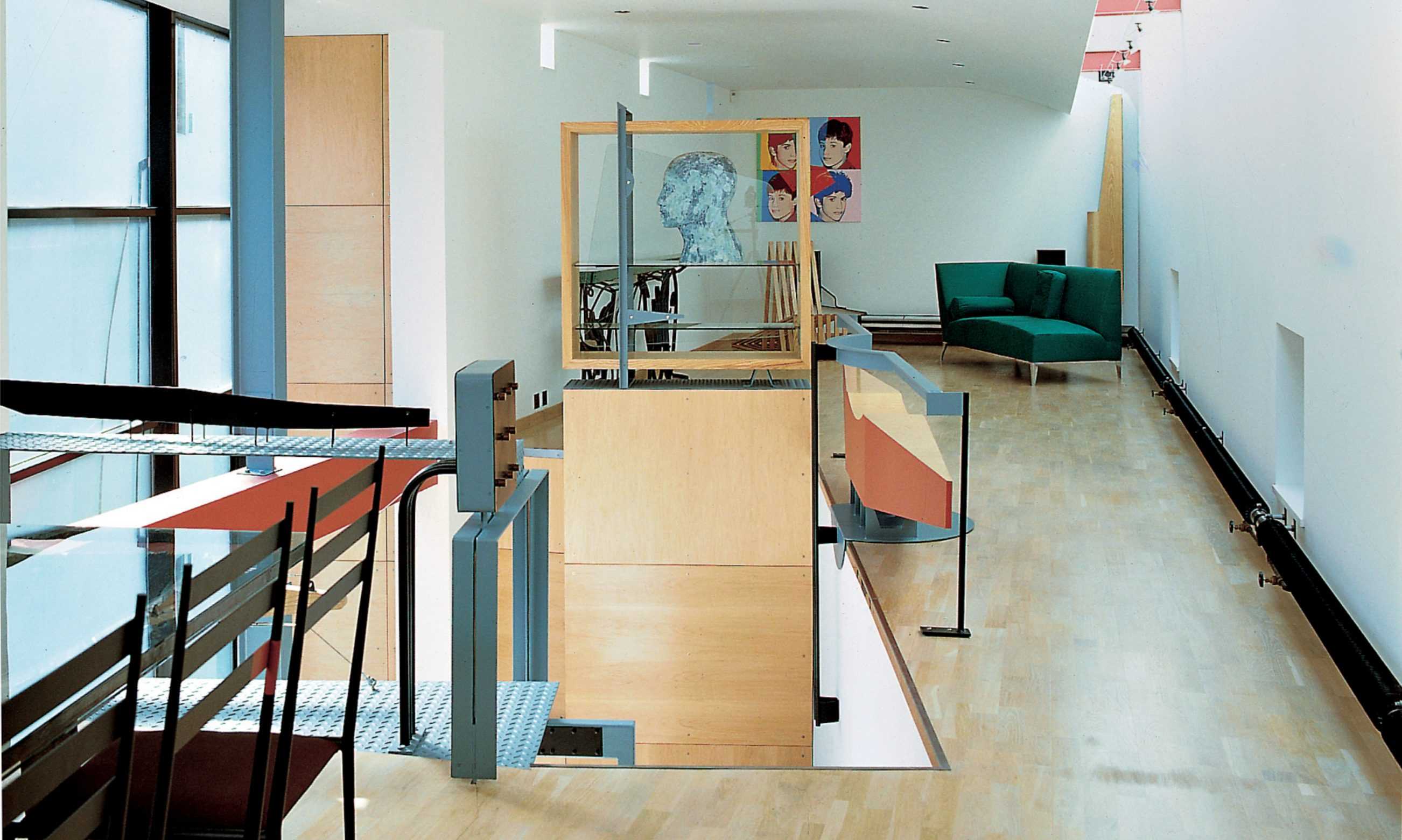
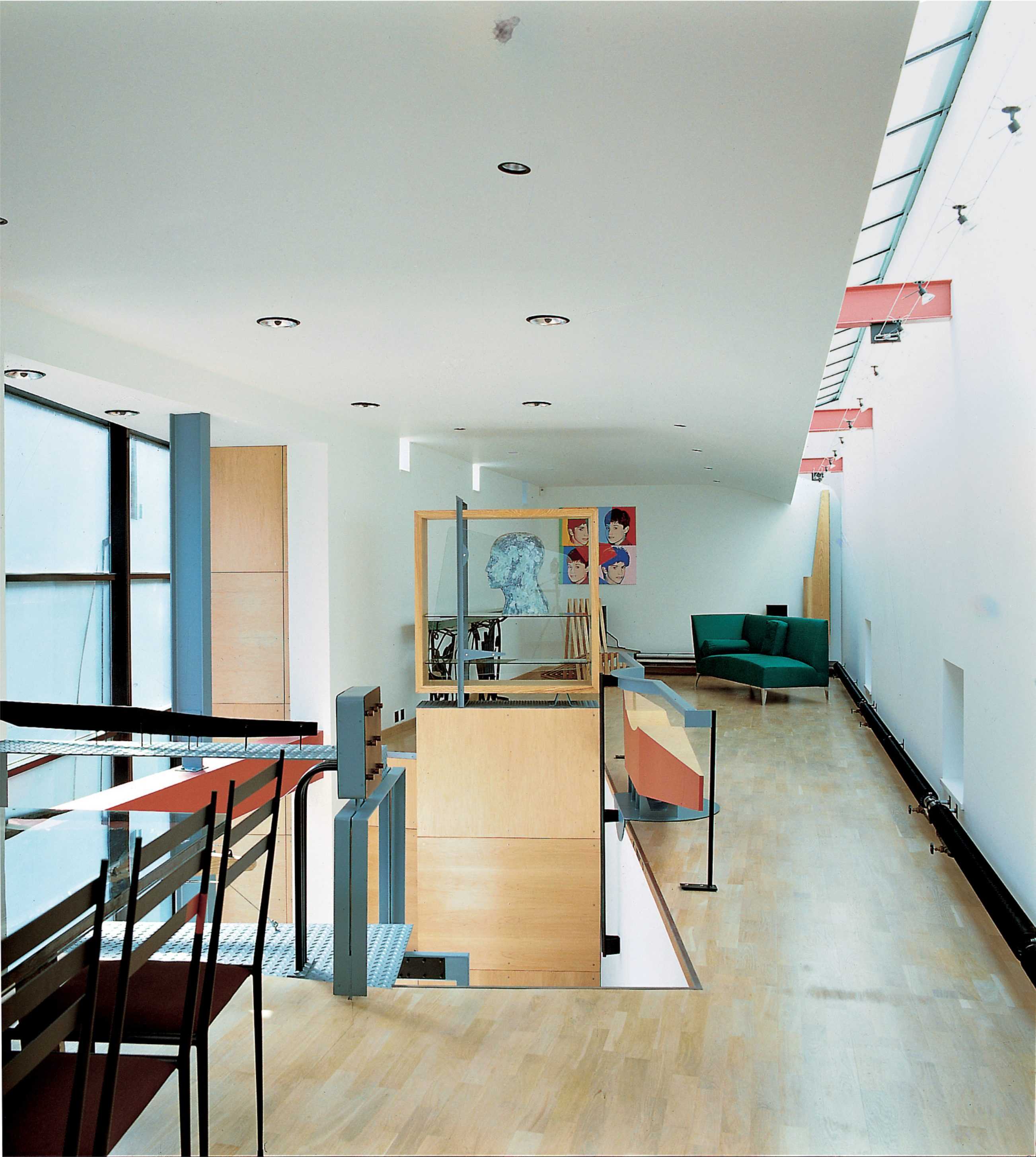
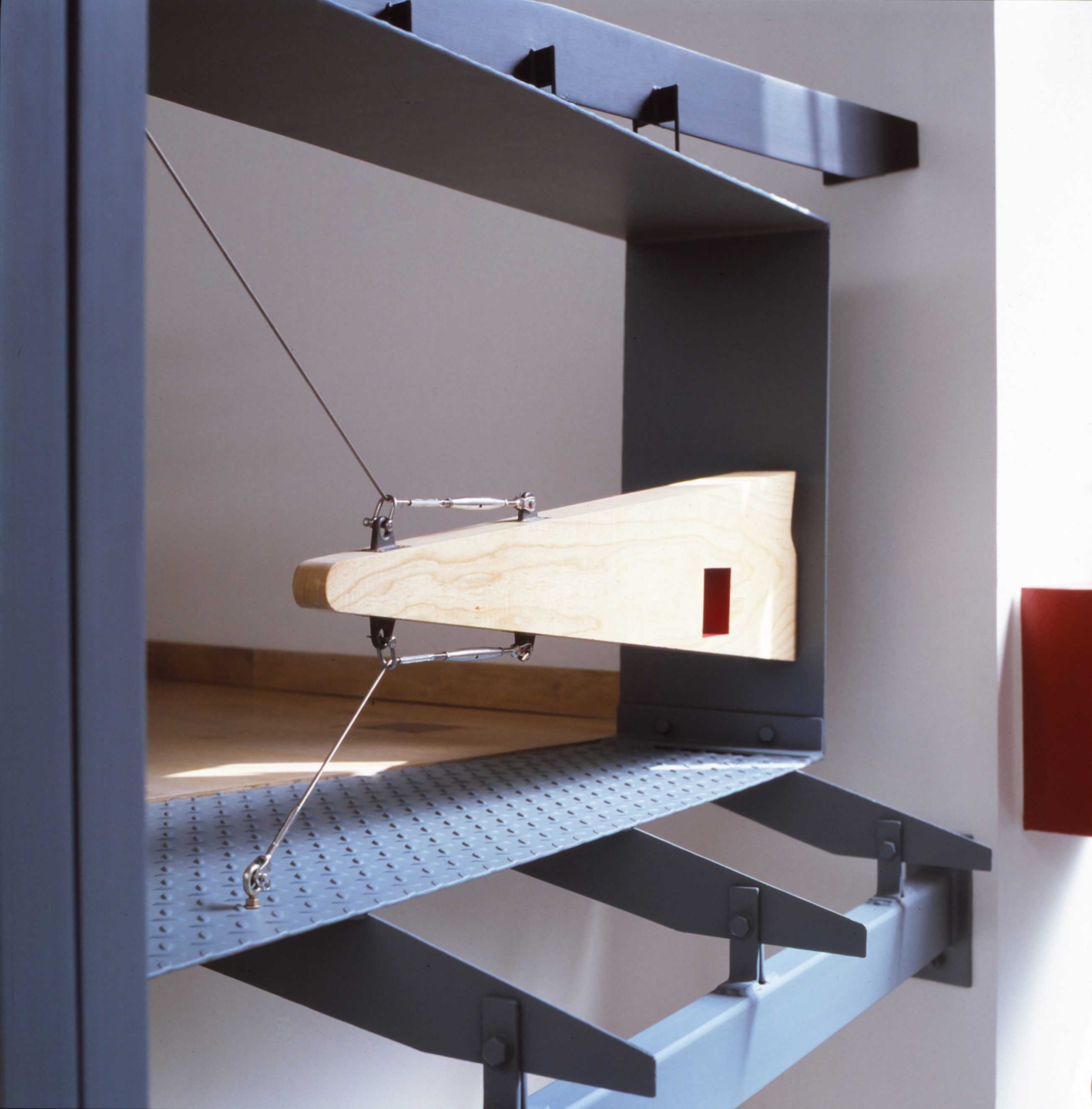
Ground floor office, a two floor apartment housing, a collection; Barry Flanagan (hare), Scott Burton (chair), Andy Warhol (portrait), Bruce McLean (table), Ron Arad (table), Jasper Morrison (sofa). Interior details are added to this list – supporting column and cantilevered balcony in steel, a vitrine, a floating boat – seat – handrail – individual narratives in a limited range of materials.
The upper floor with its 14 m skylight-wall functions as gallery, the lower lobby as chair hall. Sitting on the central barge seat the visitor has reached the vortex of the composition hovering like the house itself, not quite part of London.






TYPOLOGY: Research / Office
COUNTRY: Germany
CITY: Münster
YEAR: 2027
GFA: 2.694 m²
CLIENT: Technologieförderung Münster GmbH
VISUALISATION: © engel & haehnel
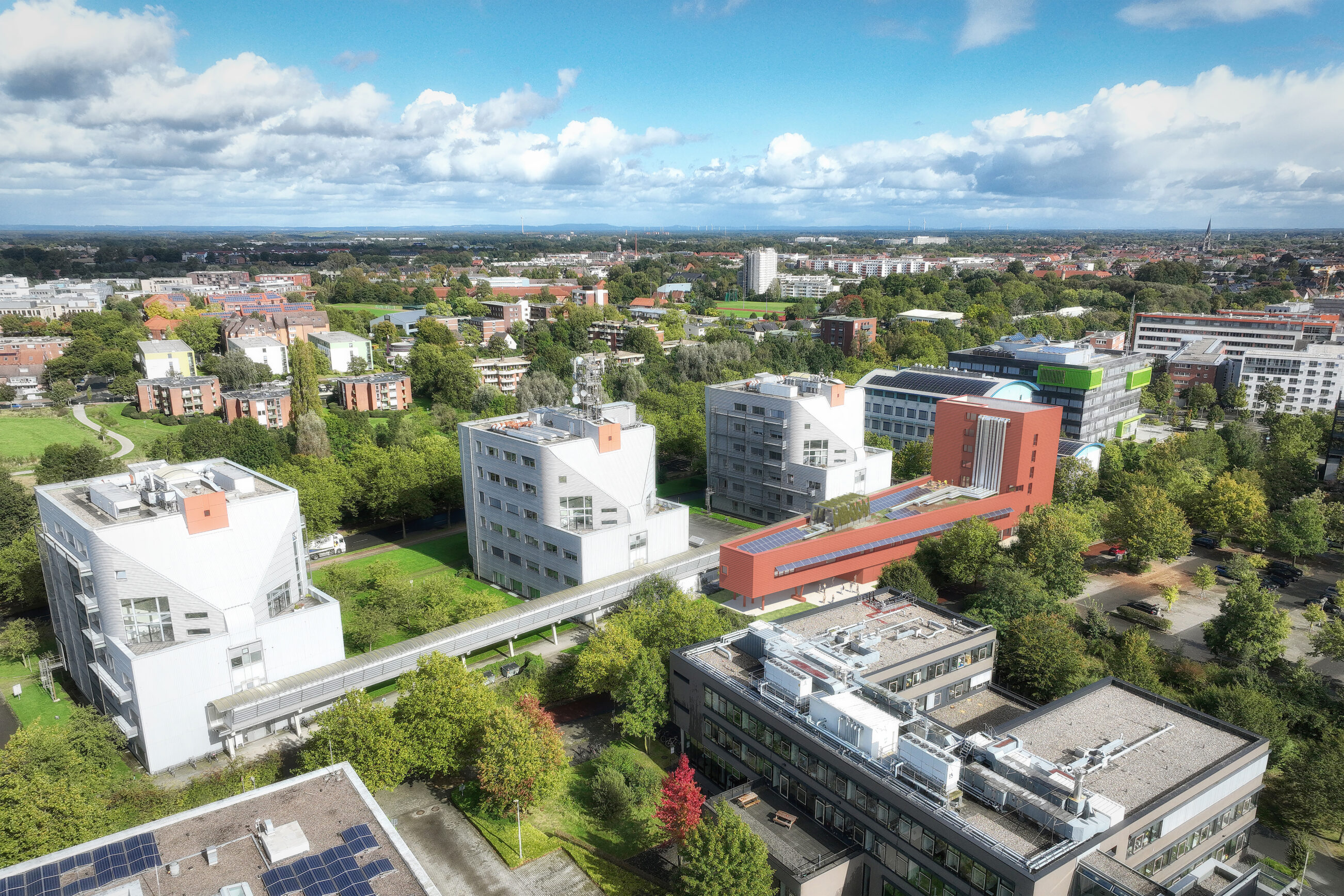
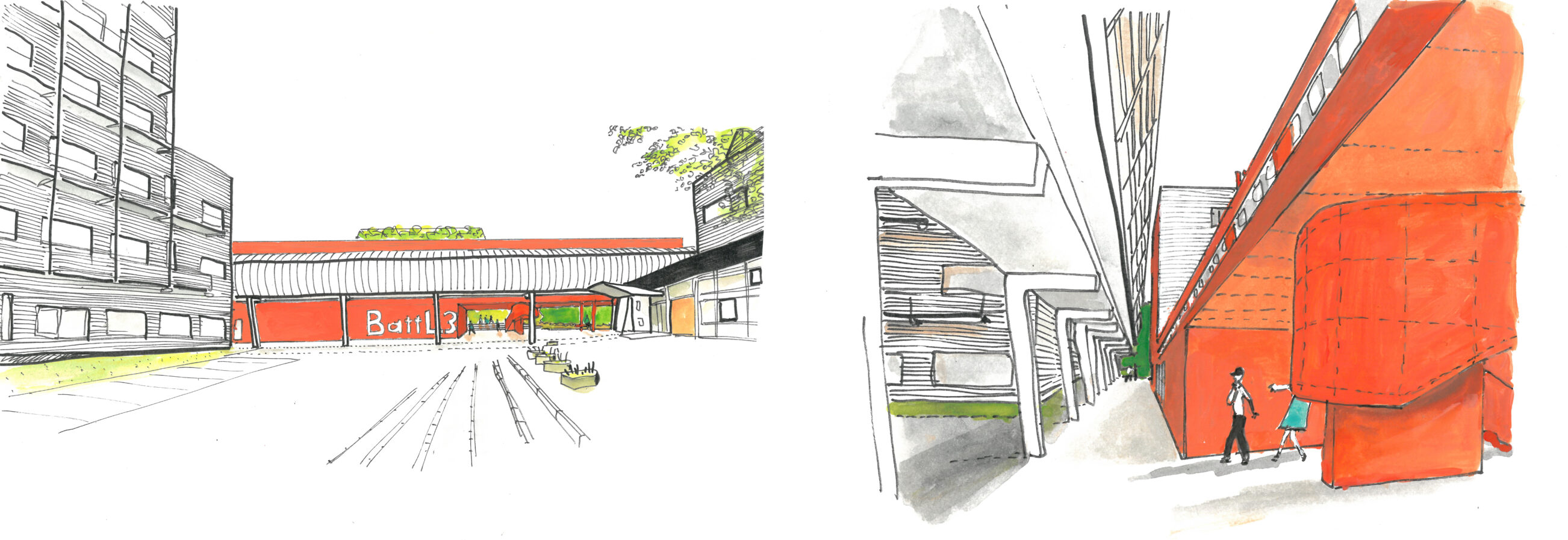
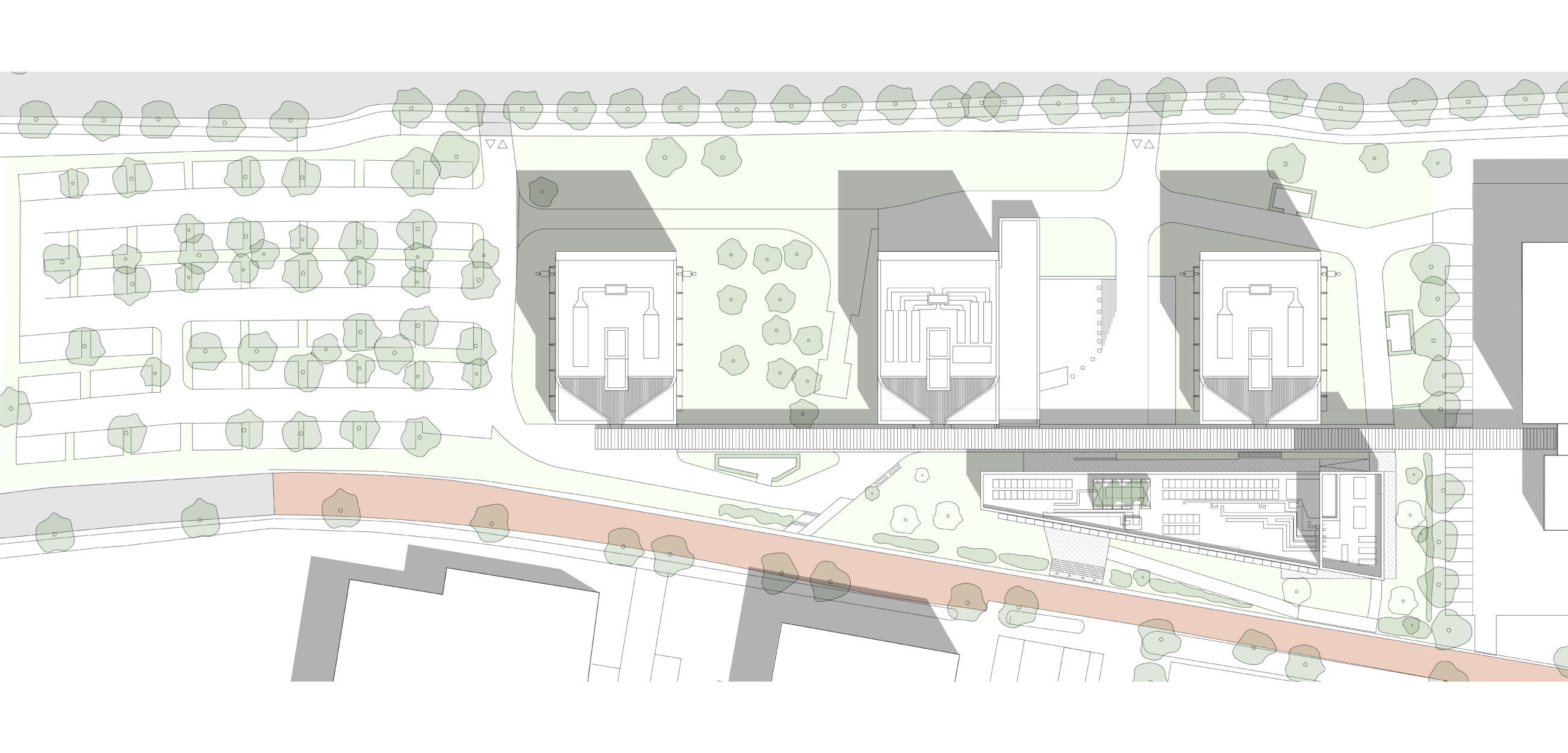
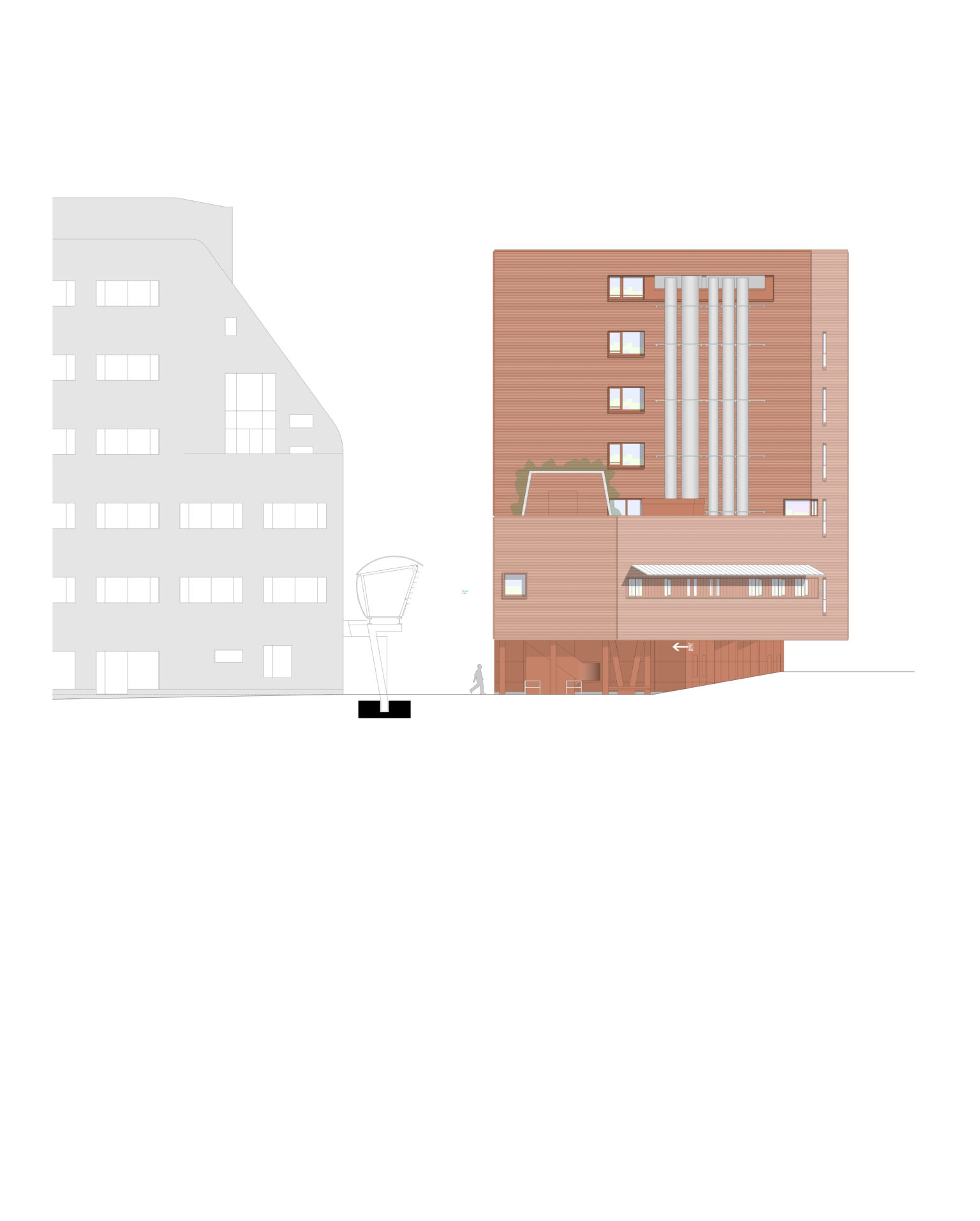
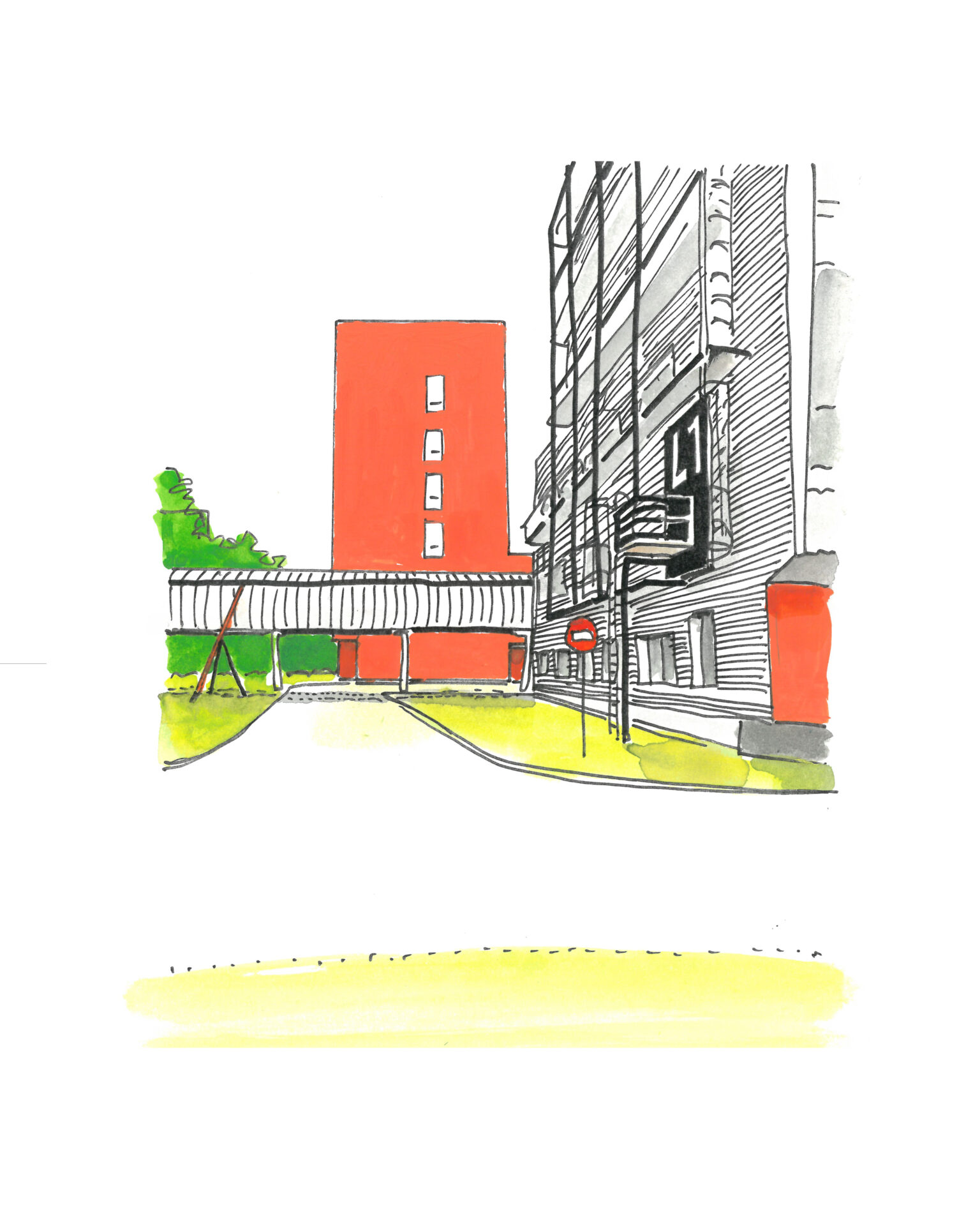
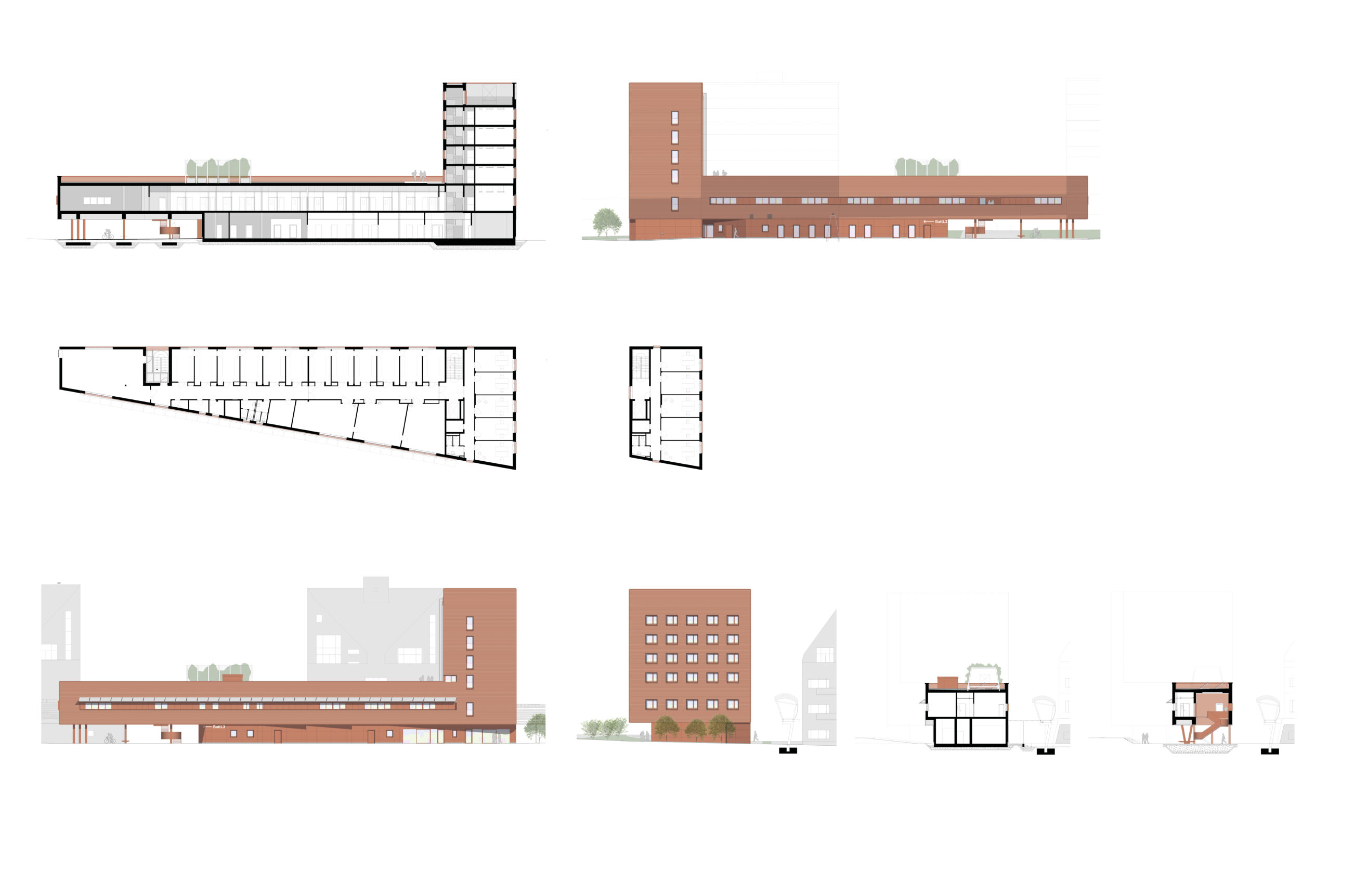
The new addition to the BOLLES+WILSON 1993 Technology Centre, is a wedge filling the site between the existing connecting bridge and the southern street – now a boulevard of campus buildings. Laboratories, workshops + technical spaces occupy the extended two-floor arm. Six floors of offices occupy the tower.
TYPOLOGY: Warehouse, Villa
COUNTRY: German
CITY: Münster
YEAR: 1993
GFA: 5.810 sqm
CLIENT: Rainer Scholze
PHOTOS: © Christian Richters, © Gabriele Bracht,
© El Croquis, © BOLLES+WILSON
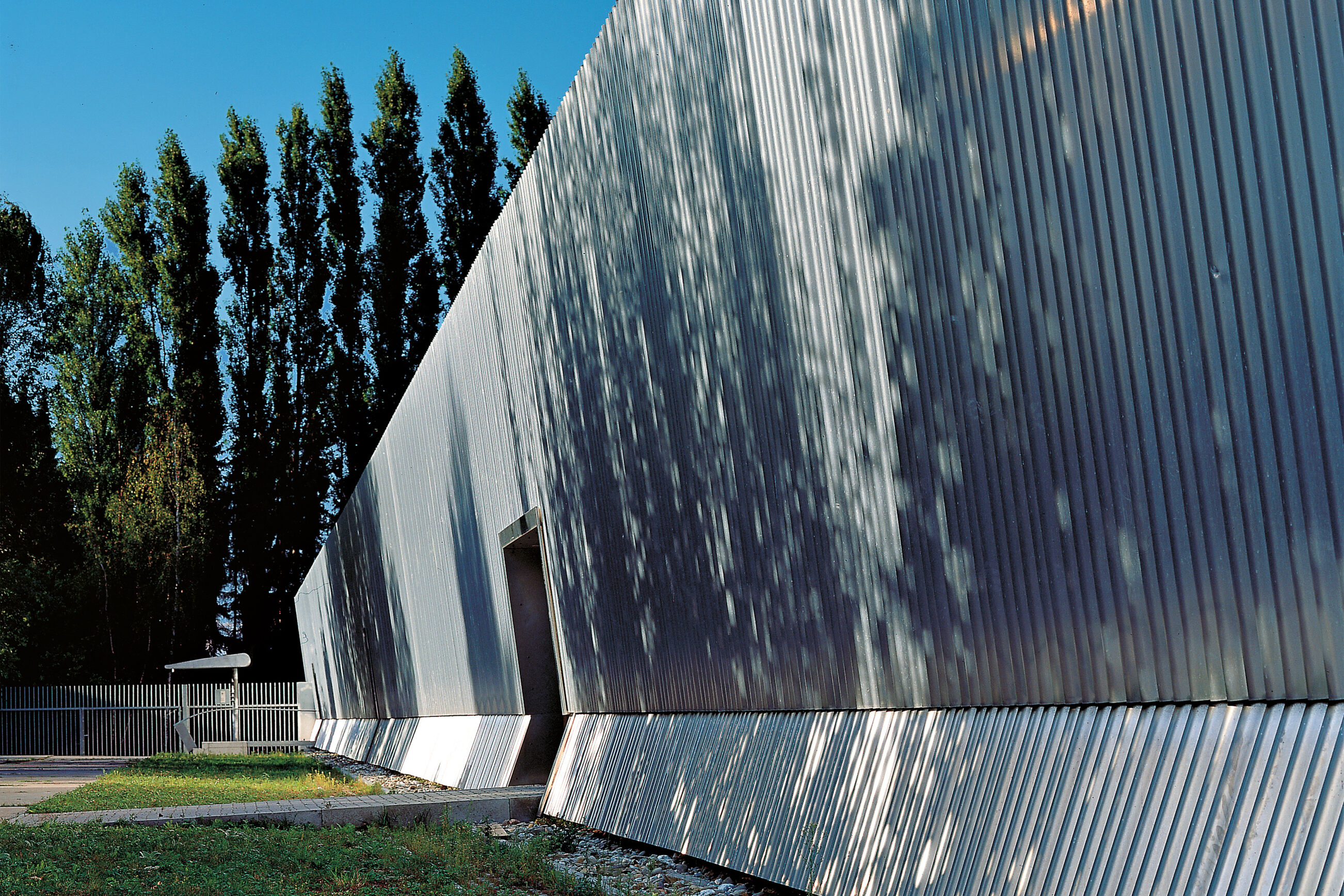
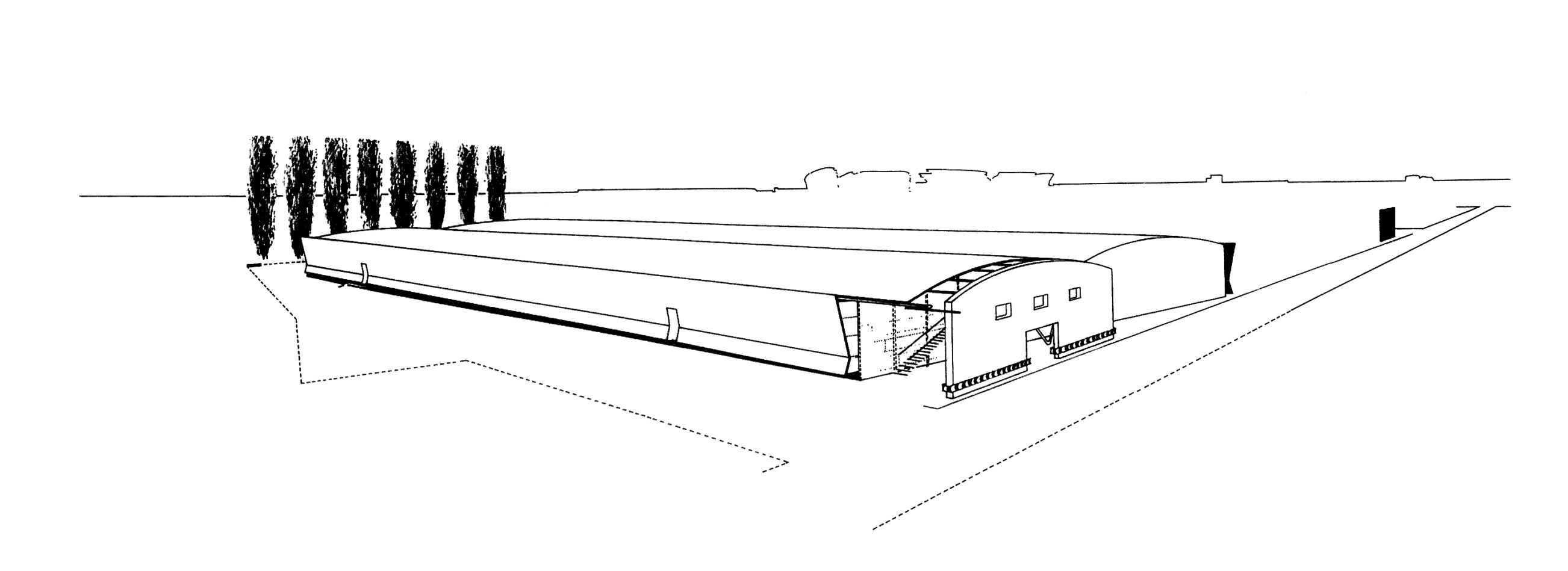
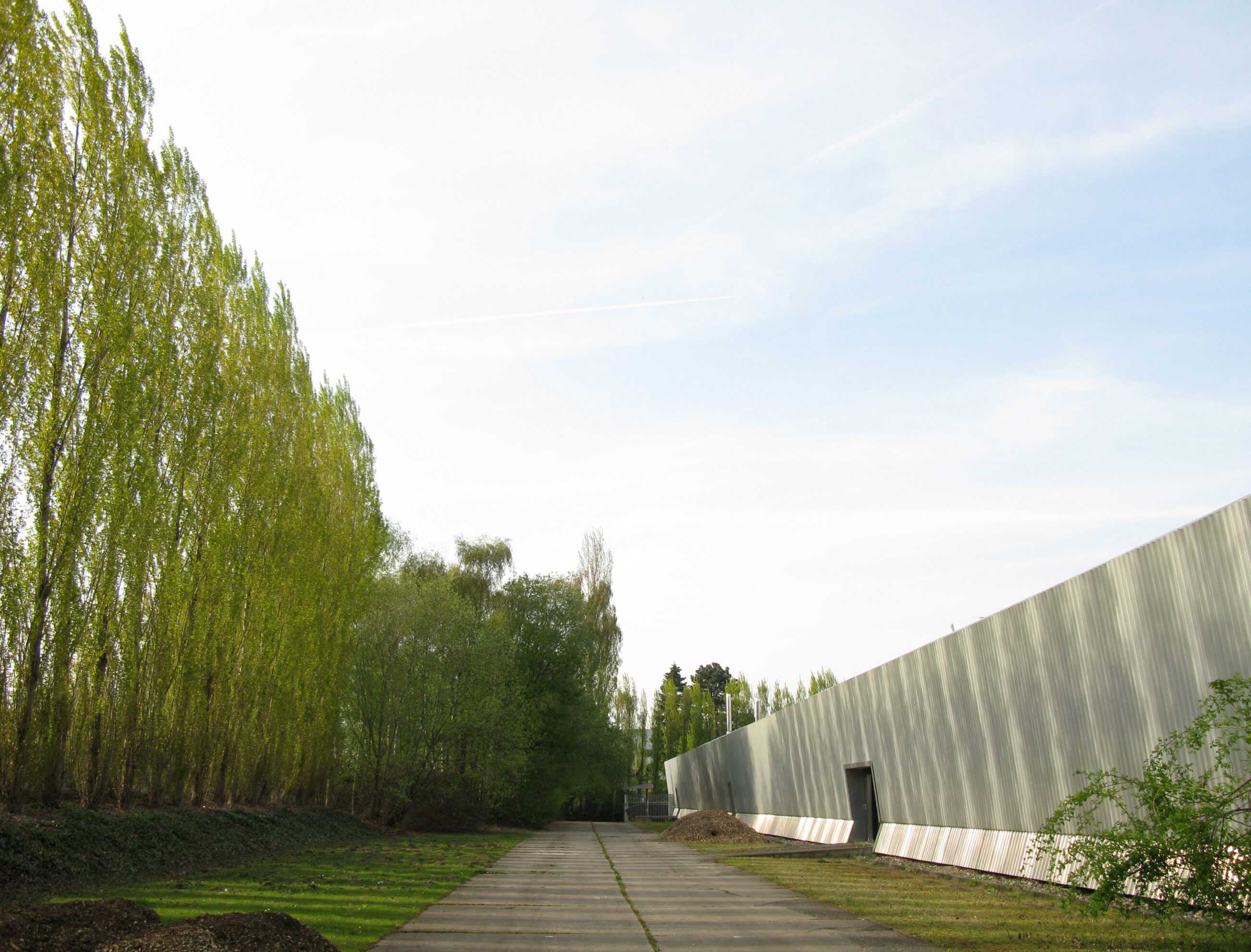
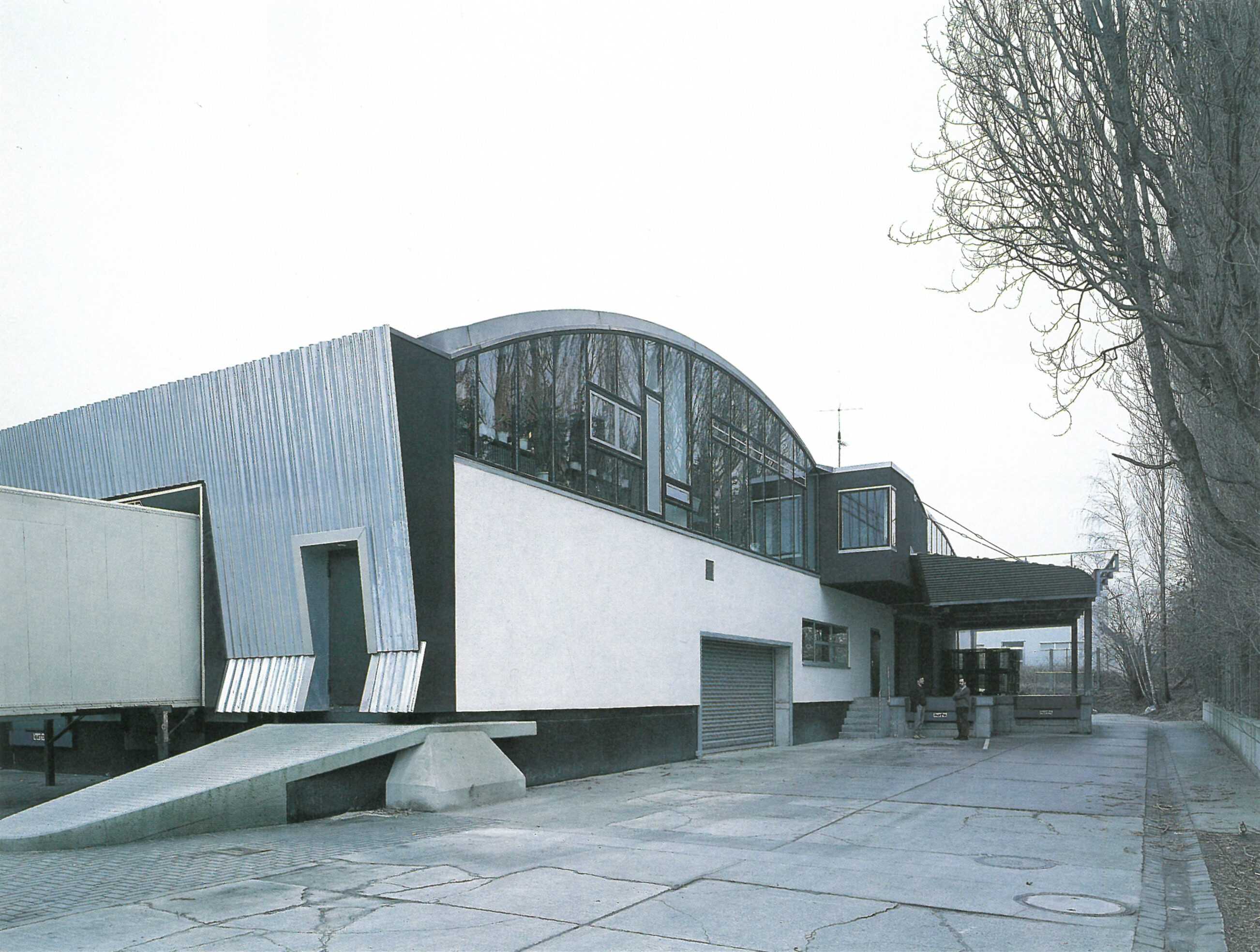
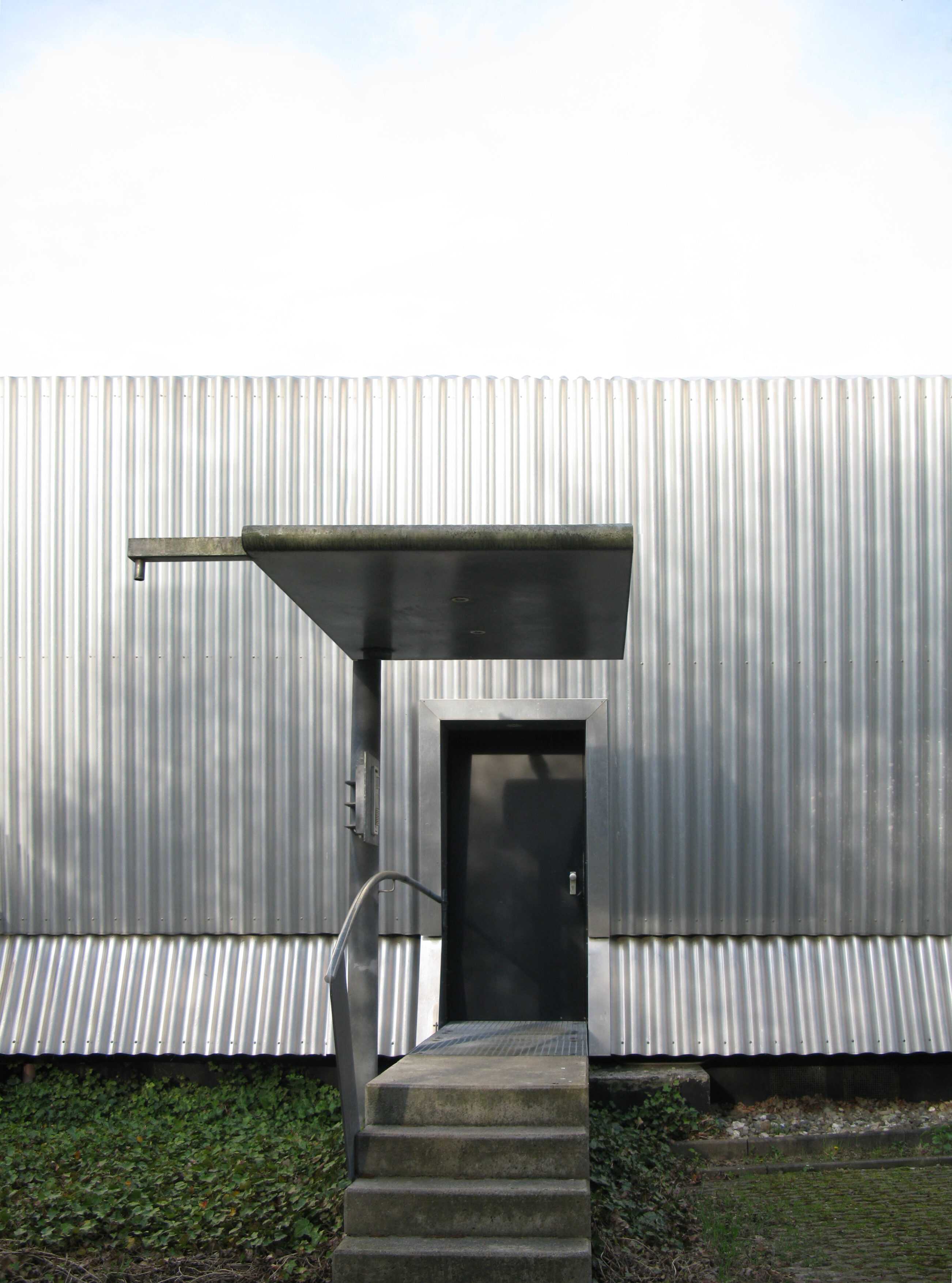
The 1990-93 shiny aluminum shed was the first of three big-box warehouse buildings built successively side by side to store and distribute furniture for the ever-expanding chain of RS + Yellow Shops. As well as this home base BOLLES+WILSON built for the same company shops/outlets in Münster, Hannover, Munich and Berlin.
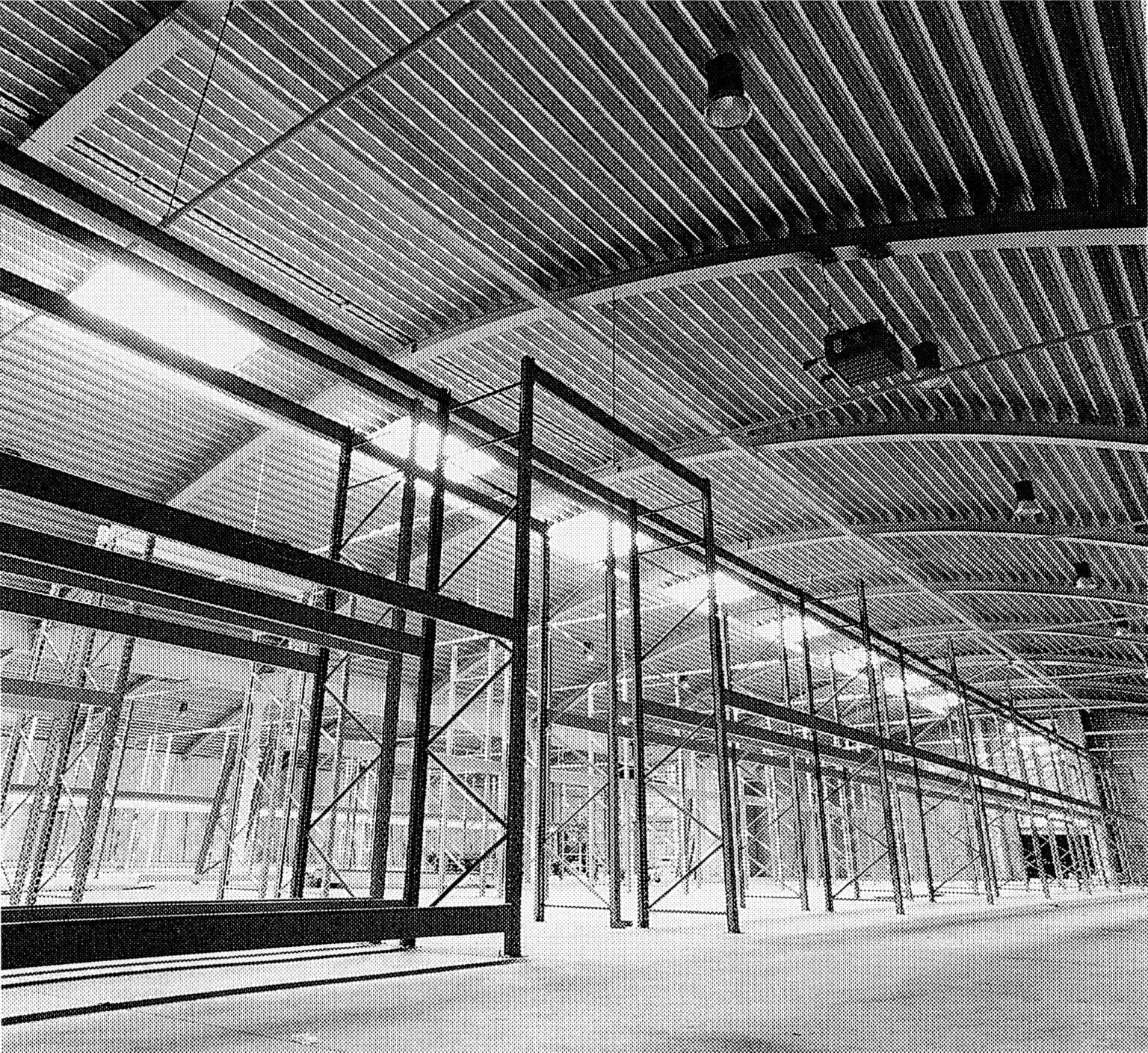
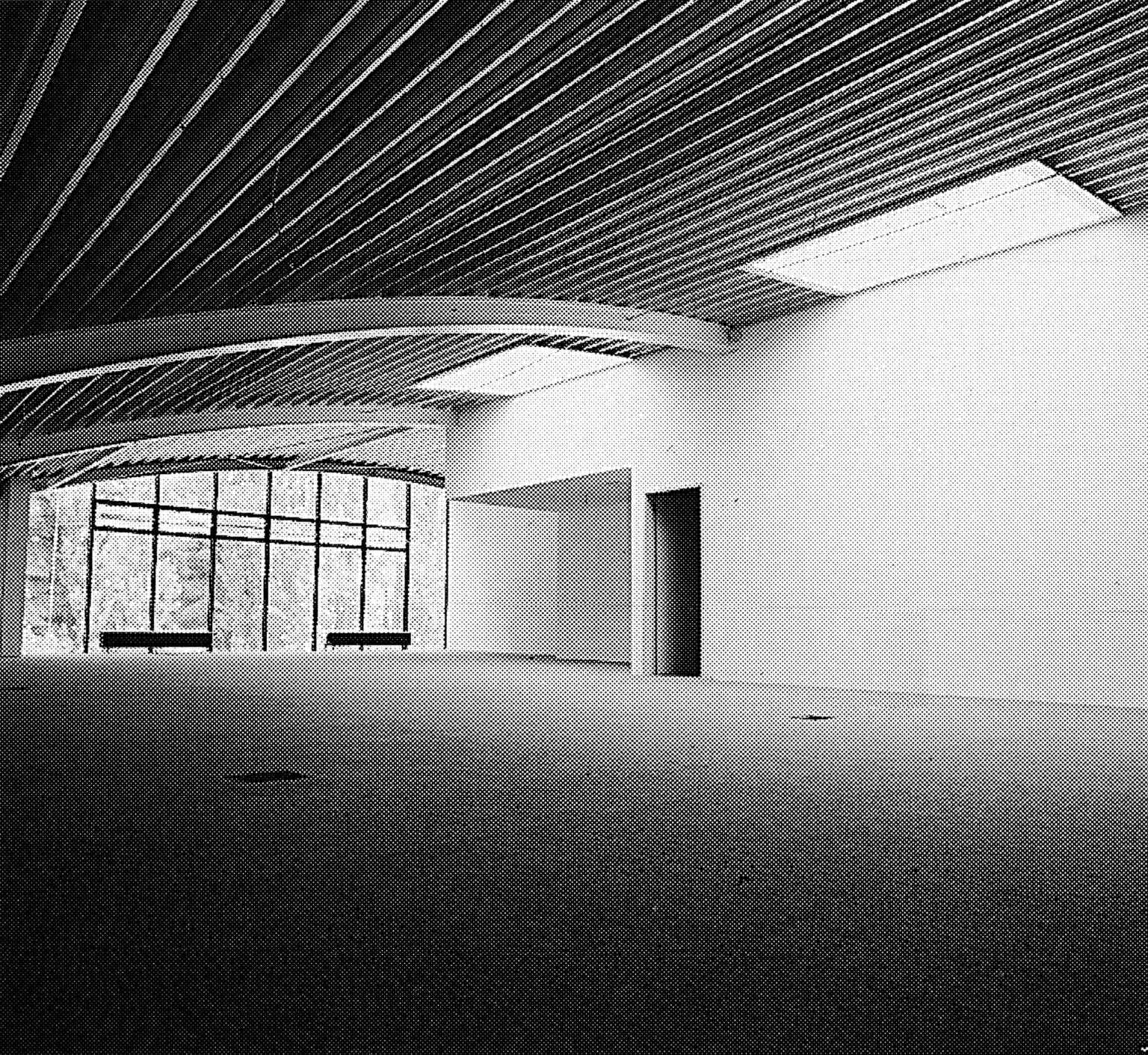
The dimensions and form of the 1993 RS+Yellow Distribution – Phase 1 were prescribed by the ruins of a half-built industrial structure. The problem was to economically clad this given form.
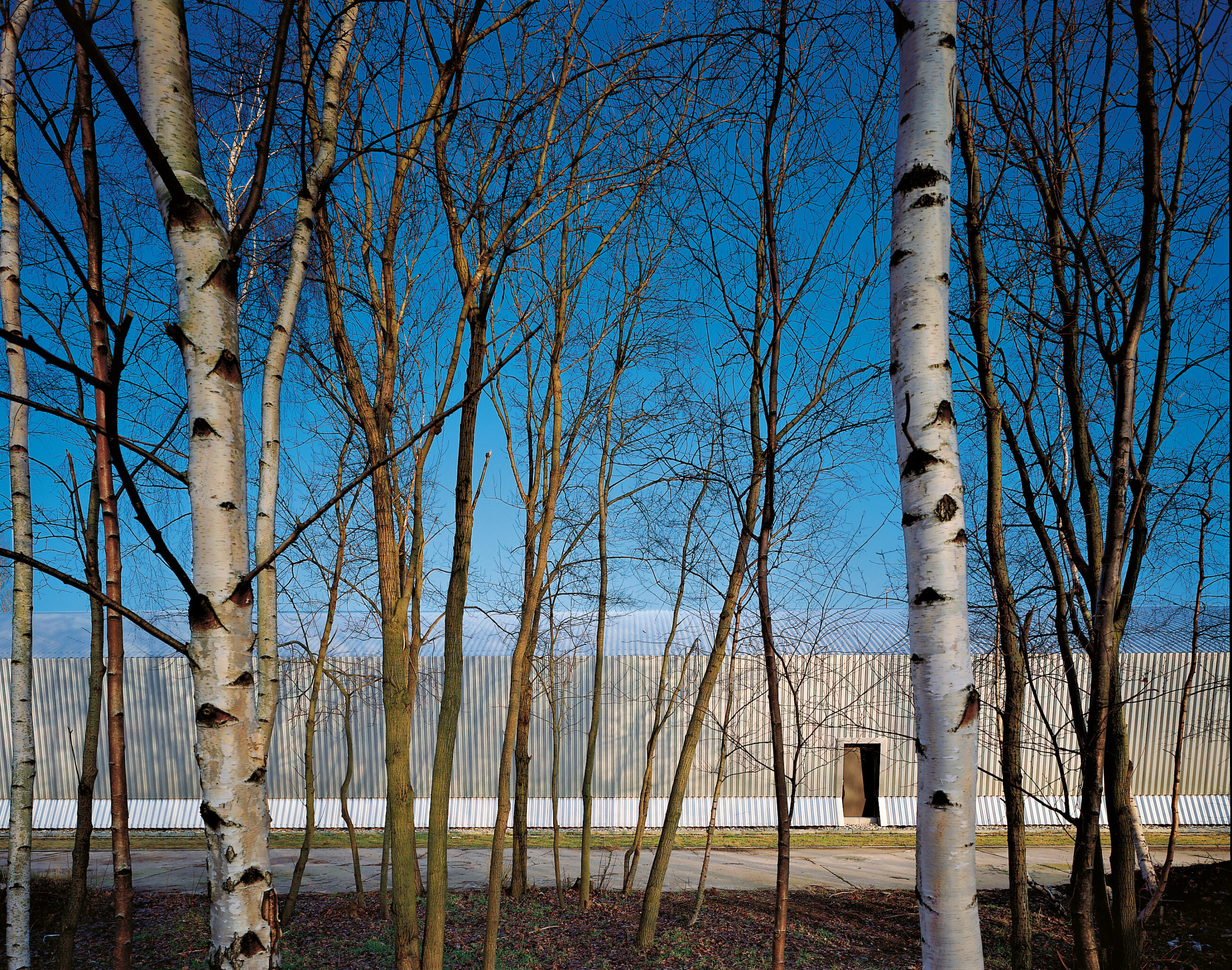
The skin of corrugated aluminum has been seen as a reference to Australian wool sheds, a typology here projected to a length of 120 m. It landed like a UFO in its fragmented peripheral context. At the time B+W were propagating such large self-evident forms (see Technologyhof Münster 1993) to anchor and give scale to the fragmentation of ubiquitous post-industrial Eurolandschaft Fields.
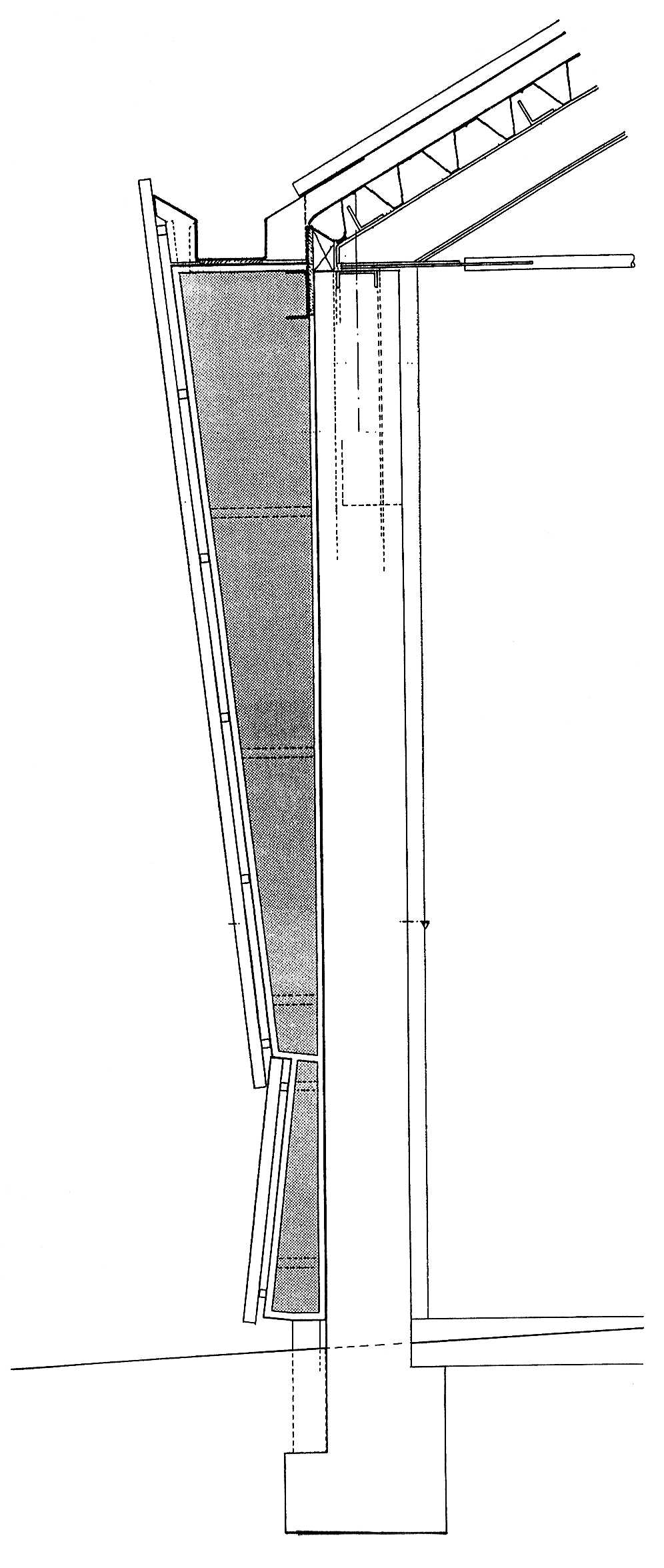
The critical detail for RS+Yellow Distribution – Phase 1 was the façade section, two intersecting plates of shiny metal. Avoiding a capping plate as well as regular downpipes, that would compromise such a pure extended surface, runoff water from the barrel-vaulted roof courses down the inside surface of the upper façade panel to be delivered in turn by the lower façade panel into a pebble drain at ground level.
The rear end of this super-shed housed the office of the company owner, this subsequently moved to the spectacular Waterscape rooftop of RS+Yellow Distribution – Phase 2 built directly beside RS+Yellow Distribution – Phase 1. A third adjacent big-box was to be capped by the client’s rooftop villa (RS+Yellow Distribution – Phase 3) but his tragic death meant that it was completed as meeting rooms, standing in another infinity pool.
TYPOLOGY: Residential
COUNTRY: Germany
CITY: Münster
YEAR: 1993
PHOTOS: © BOLLES+WILSON
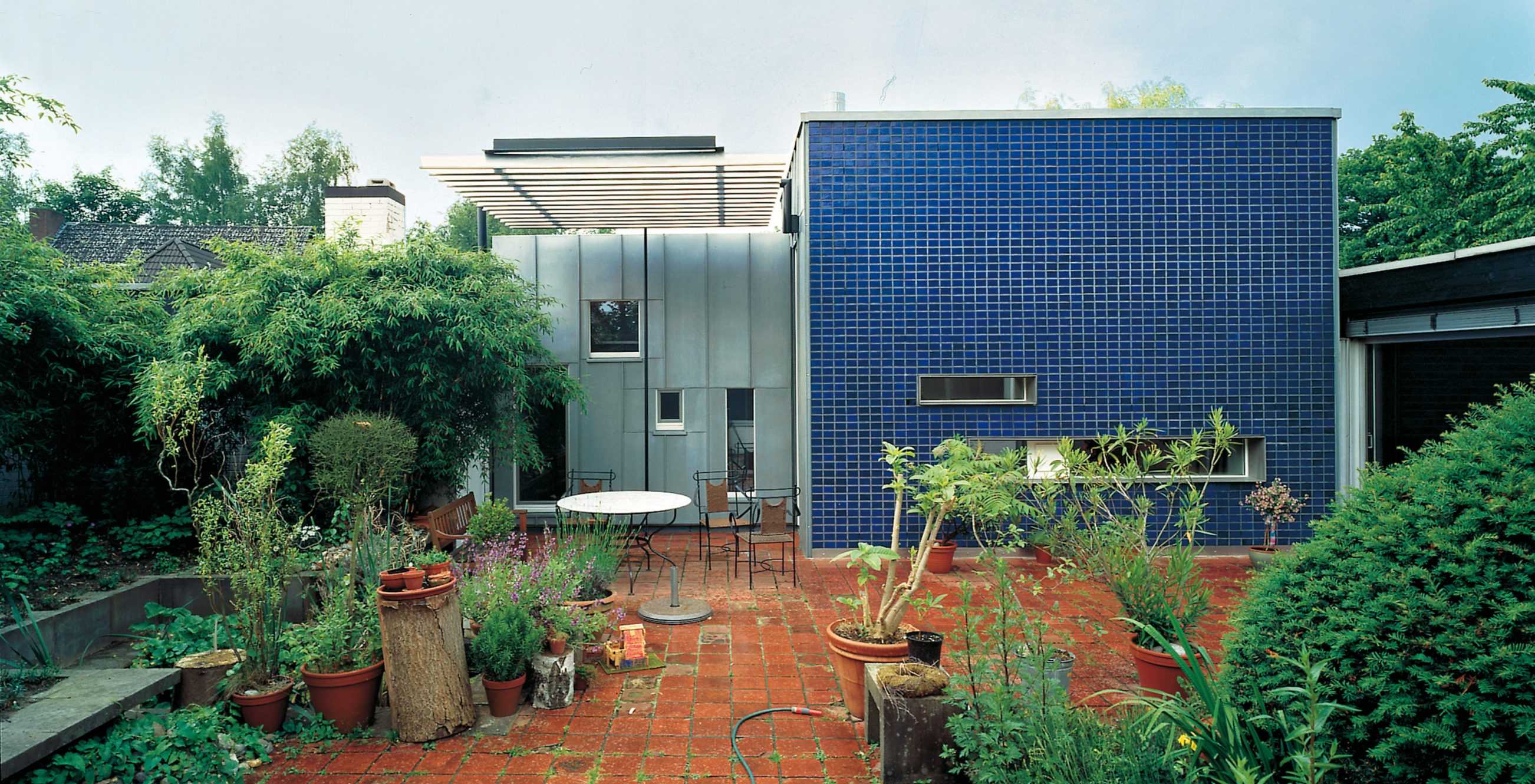
The principal element, a Blue Glazed Brick Wall corrects a disastrous alteration and also breaks the tyranny of uniform ceiling height.
The second added element, a Zinc Clad Studio Box stands adjacent the Blue Wall. The two set up an external and internal play – geometric volumes – the abstract language of the plan respected and developed.
A very modest commission, careful details with the potential of enhancing the everyday lives of their users.



TYPOLOGY: Cultural
COUNTRY: Germany
CITY: Münster
YEAR: 1993
COMPETITION: 1987, First Prize
CLIENT: City of Münster
COLLABORATOR: Harms & Partner (in realization phase)
AWARDS: Mies van der Rohe Award 1995, Nomination
German Architecture Award 1995, Commendation
PHOTOS: © Christian Richters, Julia Cawley (update 2010)
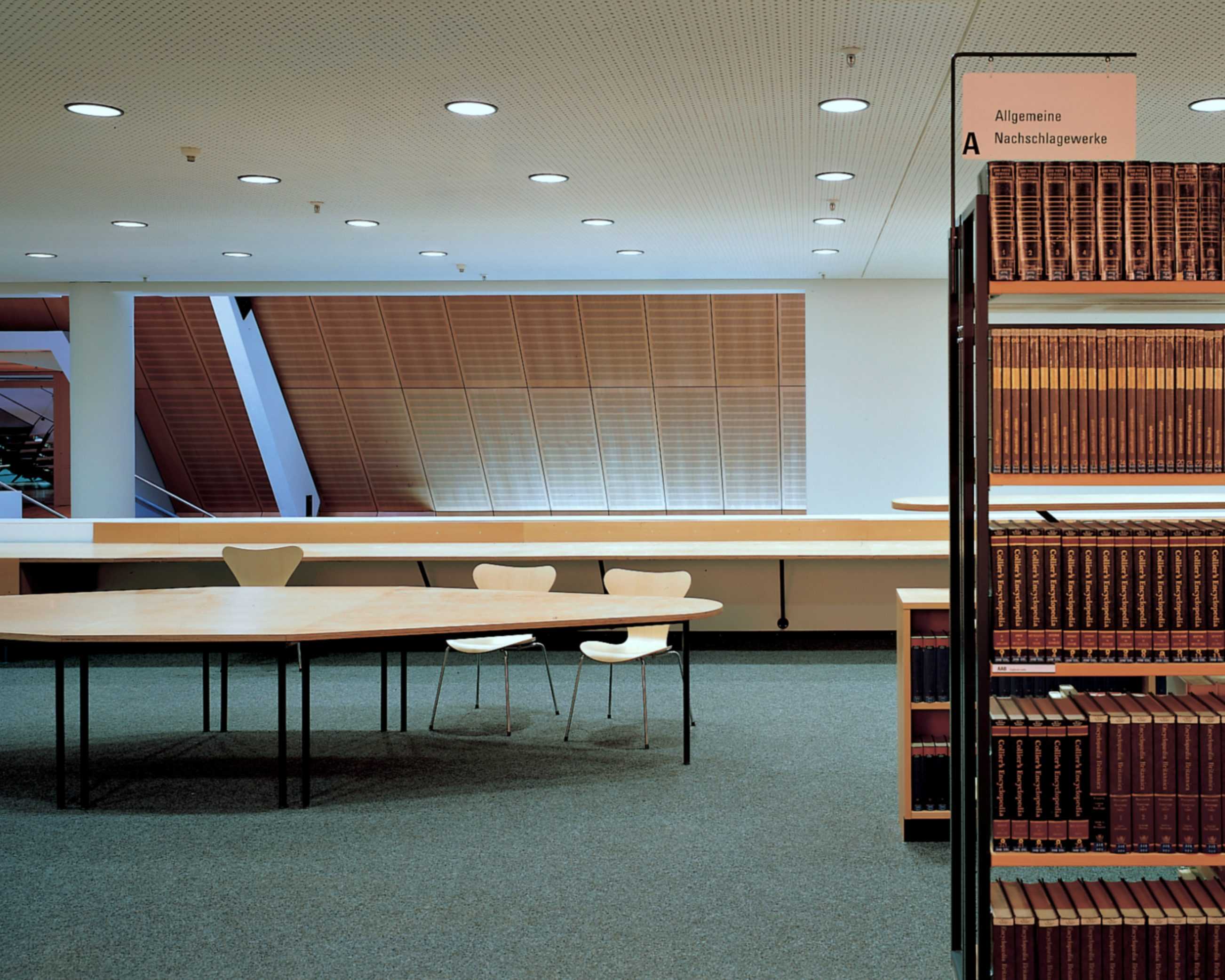
The Münster Library was BOLLES+WILSON’s first major public commission. After more than ten years it remains near the top of Germany’s ‘library-user-ranking-list’. A verification not only of functionality but also of the attention to detail, to spatial multiplicity and to the ambience and atmosphere within.
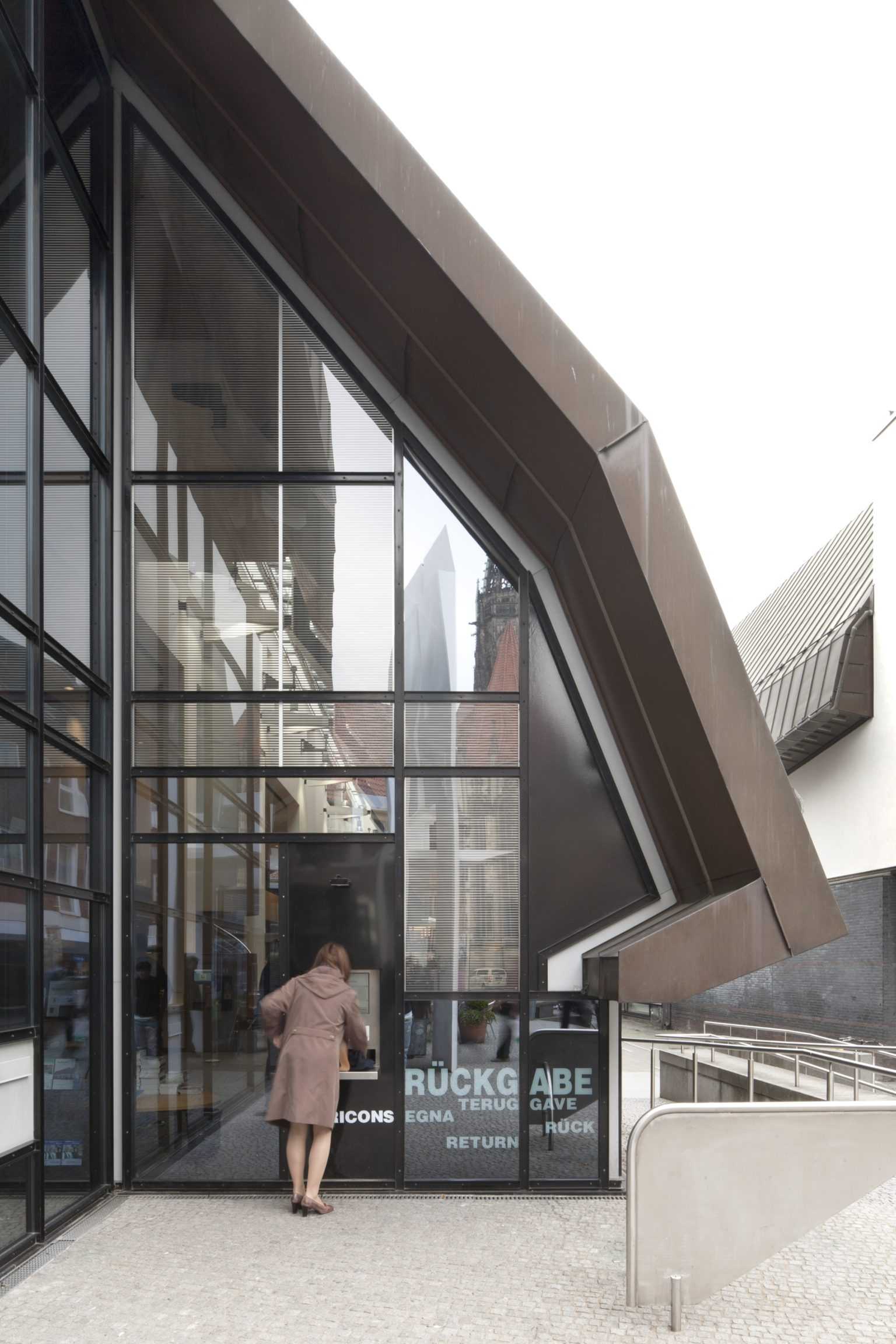
The complexities of the overall building form are derived from internal organisation and from a careful re-constitution of the fragmented context. A new pedestrian street on the axis of the nearby Lamberti Church divides the not inconsiderable mass of the Library. This fissure in the library volume is closed with folded screens (copper outside, acoustically absorbing perforated wood panels within).
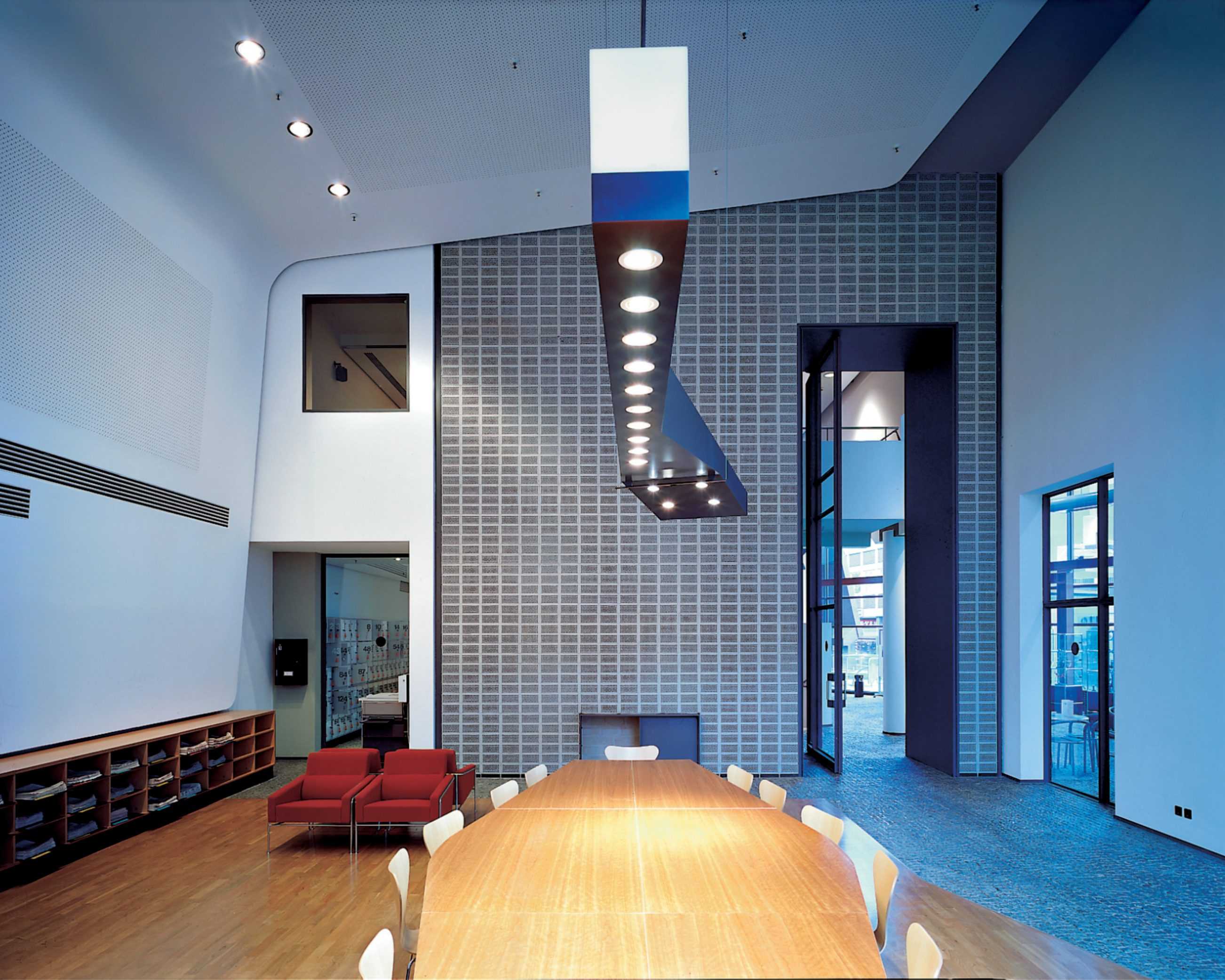
A transparent entrance zone (café, newspaper salon) leads via an information supermarket to the main information desk on the connecting bridge. This in turn is adjacent to book stacks in the ship-like outer volume. The atmosphere is quiet, studious. Books line the outer curved wall, a dramatic stair leads down through a 22 m void to the basement media library, which connects in turn to the courtyard facing children’s library and back up to the entrance zone. Up to four thousand users enter the Münster Library on one day.
+ + +
Münster City Library – Update 2010
With a newly painted facade and new automatic check out and 24-hour return automat the Münster City Library in its 18th year remains near the top of the German public library ranking list.